Local Insight
Tub-to-Shower Conversion: Materials and Options
The tile or stone you choose sets the look, but the substrate underneath determines how long it lasts. We build every shower pan on a properly sloped mortar bed, typically a 1/4-inch drop per foot toward the center drain. That slope is code-required under the Florida Building Code and prevents the pooling water that destroys grout joints over time. For walls, cement board covered with a liquid-applied waterproof membrane gives the most flexible finish for tile choices.
For showerheads and valves, Moen, Delta, and Kohler pressure-balance valves are the standard in South Florida's residential market. They prevent scalding when a toilet flushes, required in all new shower installs under Florida's plumbing code. Thermostatic valves with separate volume controls are available for a more custom, spa-like experience. Rain heads, body sprays, and handheld wands can all be roughed in during the same conversion if you tell us upfront.
“Frameless 3/8-inch tempered glass is the most popular choice in places like Miami Beach tub-to-shower conversion projects, where high-rise condos demand a sleek, open look.”
Key insight from this section
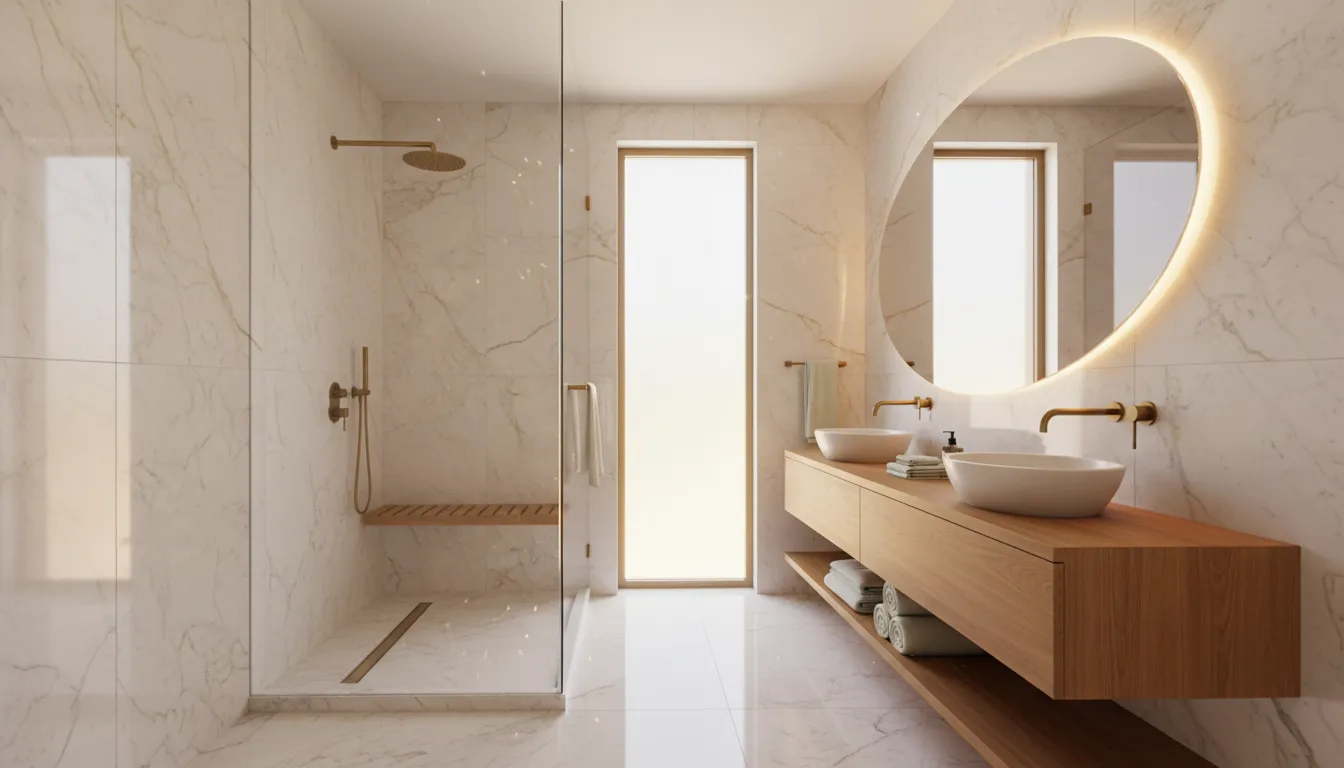
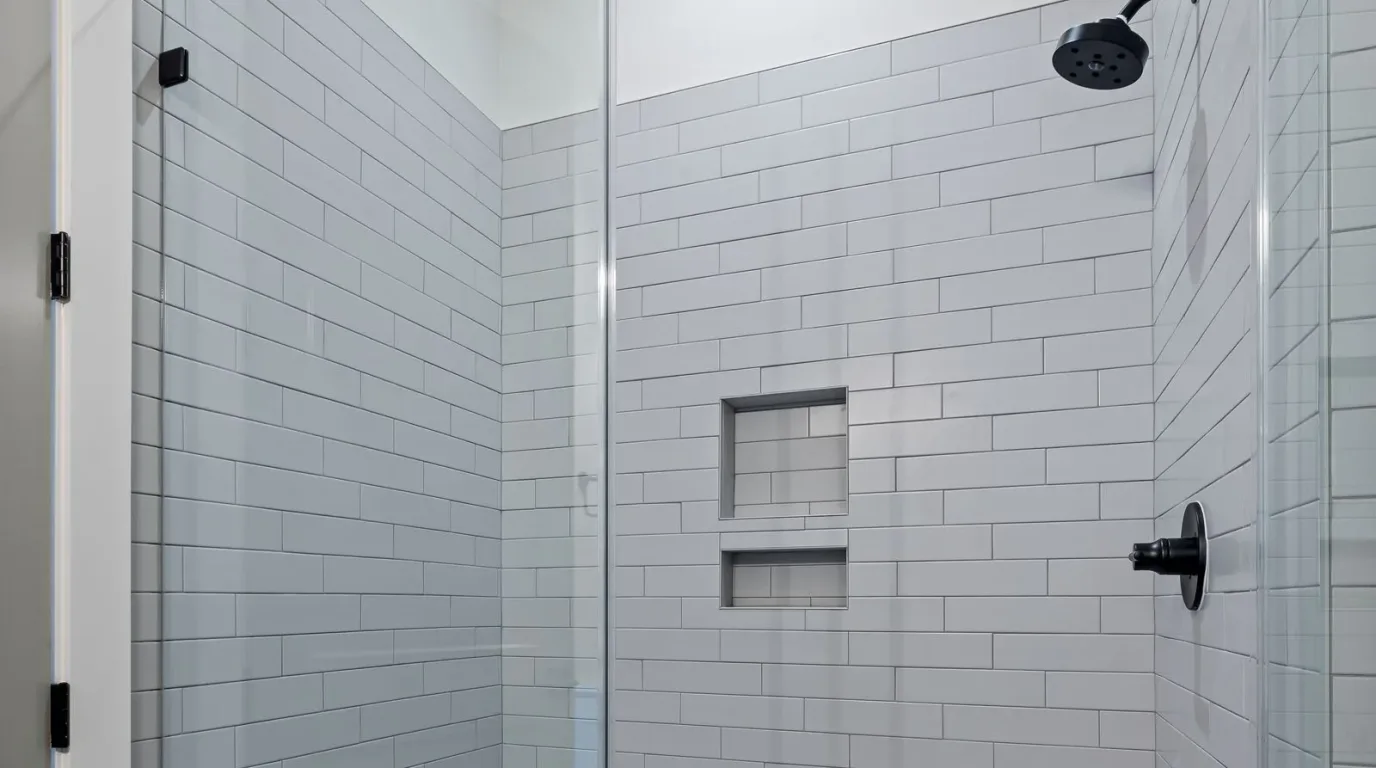
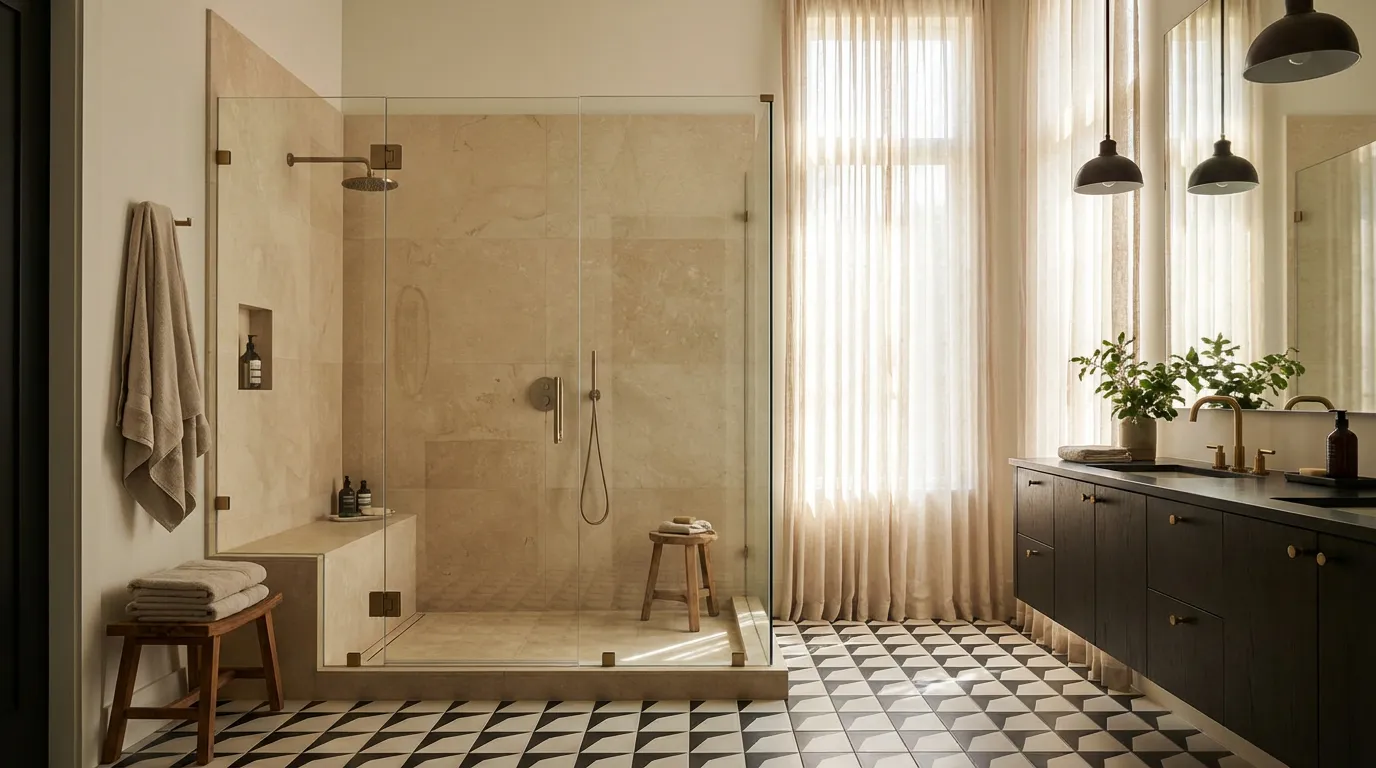
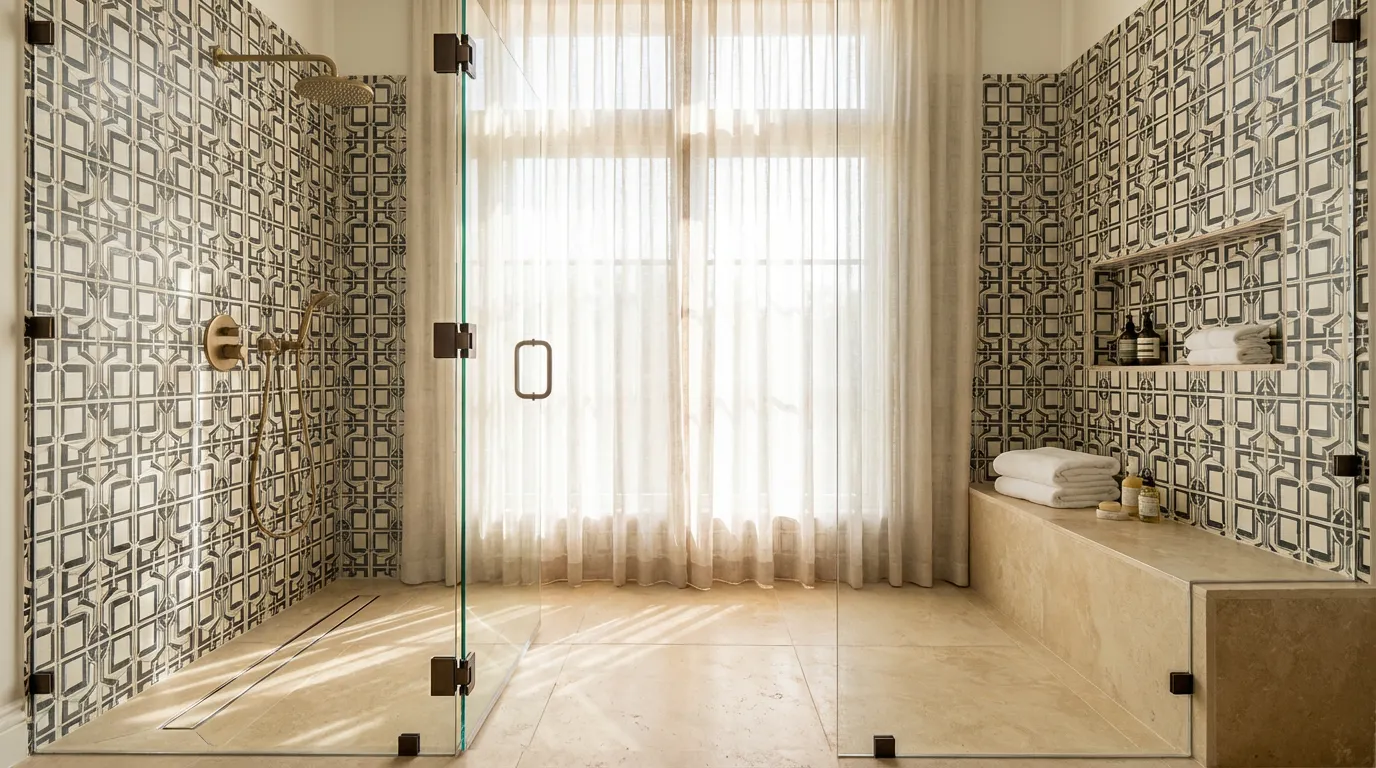
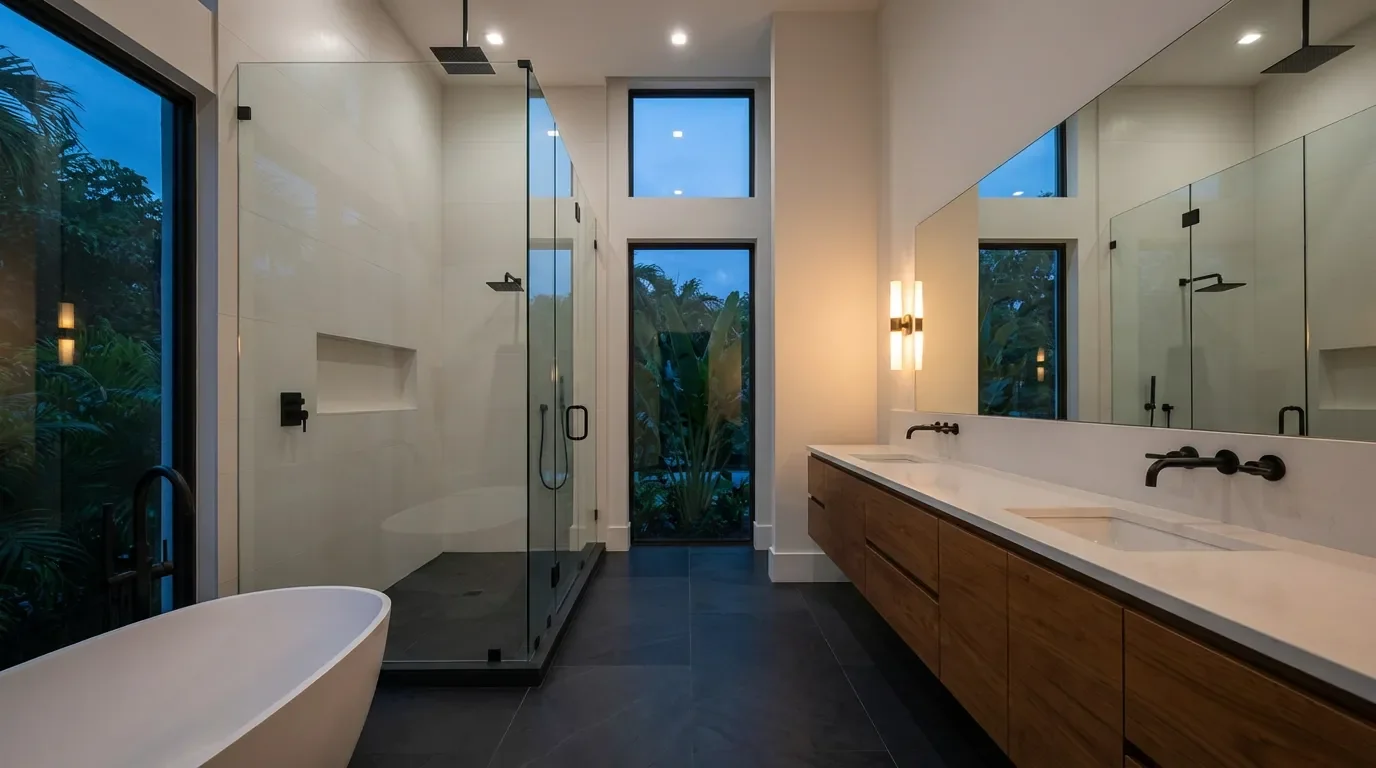
Glass enclosures deserve special attention in coastal markets. Frames and hardware exposed to salt air corrode fast if you use standard aluminum. We specify brushed nickel or matte black finishes with marine-grade seals. Frameless 3/8-inch tempered glass is the most popular choice in places like Miami Beach, where high-rise condos demand a sleek, open look. In suburban homes across Kendall and Cutler Bay, semi-frameless swinging doors offer a balance of style and cost.