Materials Guide
Glass & Frames, made clear.
Every impact window starts with the same promise. Laminated glass that holds together. From there, a few simple choices shape comfort, efficiency, and style.
Miami-Dade NOA verified
What's inside the glass
Strength, built in layers.
- 1
Laminated glass bonds two panes to a tough interlayer, so broken glass stays in place.
- 2
An insulated unit (IGU) adds a sealed air or argon space for comfort and efficiency.
- 3
A low-E coating reflects the sun's heat while keeping the view clear.
The good stuff
Three choices that shape your windows
The glass
Laminated single-pane meets the structural code. A laminated IGU adds insulation, and low-E can cut solar heat gain substantially, a real saving where cooling drives the power bill.
The frame
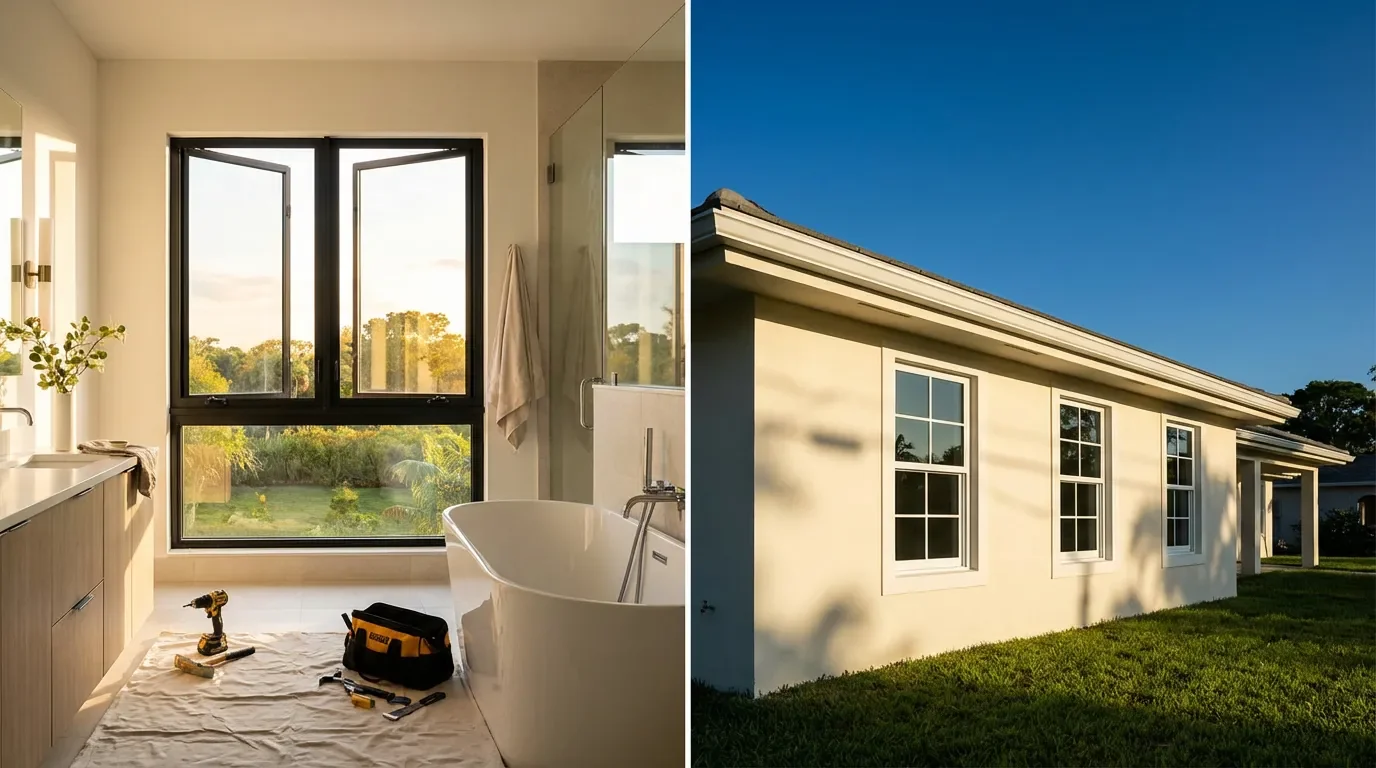
Aluminum is the standard in HVHZ markets and stands up to salt air. Vinyl costs less and insulates slightly better but needs careful NOA review. Hybrid aluminum-clad vinyl splits the difference.
The look
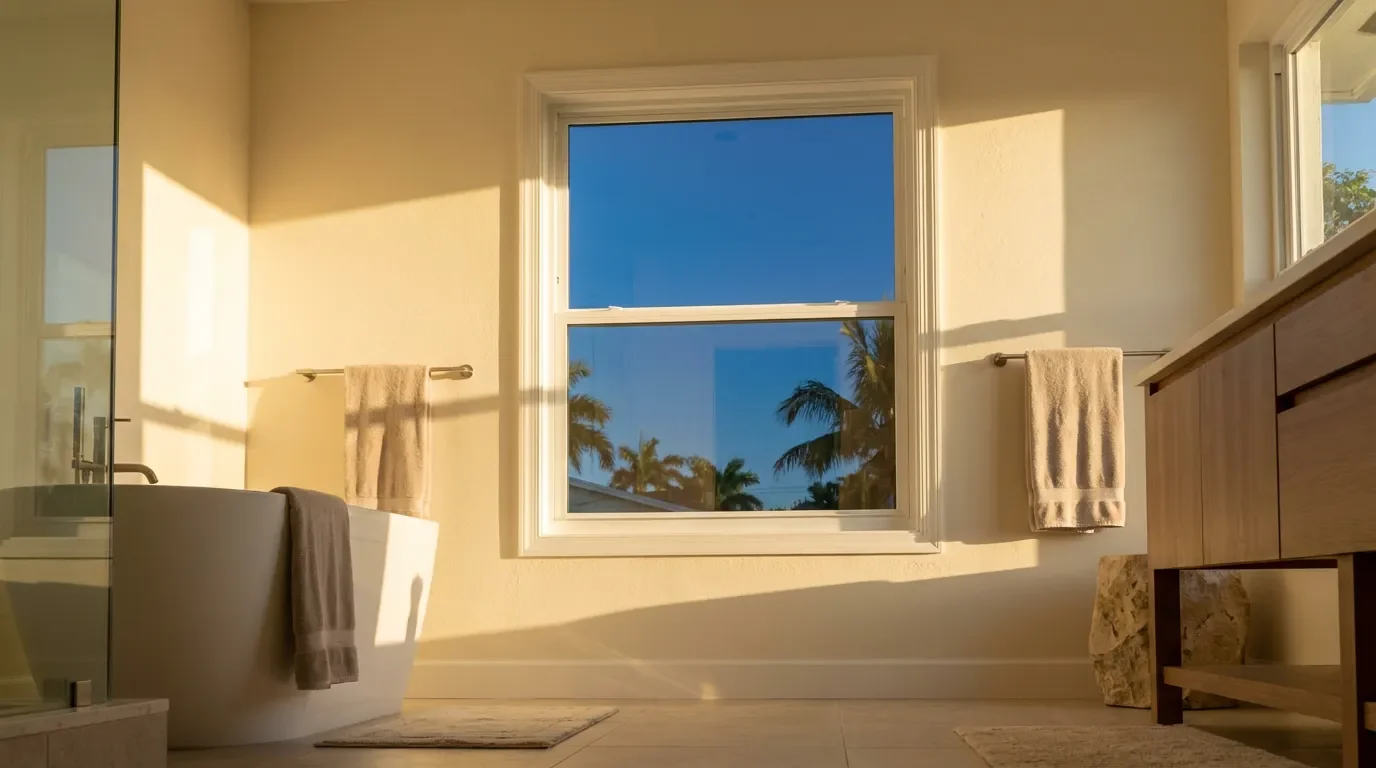
Frame colors and glass tints let you match your home's style, from crisp white frames with clear glass to dark frames with a subtle tint.
Where it shines
Quick guide
There's no single right answer: the best build depends on your wall's sun exposure, your distance from the coast, your wind zone, and your budget. During the free estimate we recommend a build room by room.
Choosing
Laminated single-pane or low-E IGU?
Laminated Single-Pane
- Meets HVHZ structural code
- Modest heat reduction
- Moderate noise reduction
- Lower upfront cost
Low-E IGU
- Meets HVHZ structural code
- High solar-heat reduction
- Better noise reduction
- Higher upfront, lower power bills
Questions
Good questions, straight answers.
Still wondering about something? Call 954-251-0866 and talk to a real person.
Free estimate
Let's find the right windows for your home.
A Haven consultant measures every opening, confirms your wind zone, and walks you through options with itemized pricing. No cost, no pressure.
- Permits and inspection handled for you
- Dedicated, long-tenured install crews
- Financing available
Tell us about your project
We'll respond within 24 hours.
Explore
More window styles
General information based on current Florida Building Code requirements and Haven's field experience. Product approvals, sizes, costs, and timelines vary by home and municipality. Your free estimate confirms the details for your project. Verify any contractor's license at myfloridalicense.com.