Why South Florida Roofing Rules Are Unlike Any Other State
Roofing in South Florida must meet the Florida Building Code HVHZ (High-Velocity Hurricane Zone) standards in Miami-Dade and Broward counties.
These rules require 175+ mph wind-uplift resistance, six-nail fastening patterns, and materials approved through a Miami-Dade NOA (Notice of Acceptance), the strictest residential roofing code in the United States. No other state requires this level of product testing before a material can be installed on a home. That means not every shingle or tile sold at a big-box store is legally usable in Miami-Dade. You need a licensed contractor who knows which products carry active NOA approvals. You can search the Miami-Dade NOA database yourself to confirm any product before signing a contract.
Beyond code compliance, South Florida's climate punishes every weak point in a roofing system. UV radiation breaks down organic materials fast, faster than in the Northeast or Midwest. Salt air corrodes exposed metal fasteners near the coast, which is why coastal homeowners should read our guide on salt air roof damage in coastal South Florida before choosing a material. Standing water from heavy afternoon rains finds every unsealed gap. These factors are why a roof's lifespan in Florida is often shorter than the national average unless you choose the right material from the start.
That combination of code strictness and climate stress is exactly why the question “what is the best roofing material” doesn't have one universal answer. The right material depends on your roof's pitch, your home's structural capacity, how close you live to the coast, and how long you plan to stay in the house. The sections below walk through the three materials Haven installs most often across Miami-Dade, Broward, Palm Beach, Martin, and St. Lucie counties, and how each one performs against HVHZ code and South Florida's climate.
Concrete and Clay Tile: The South Florida Standard
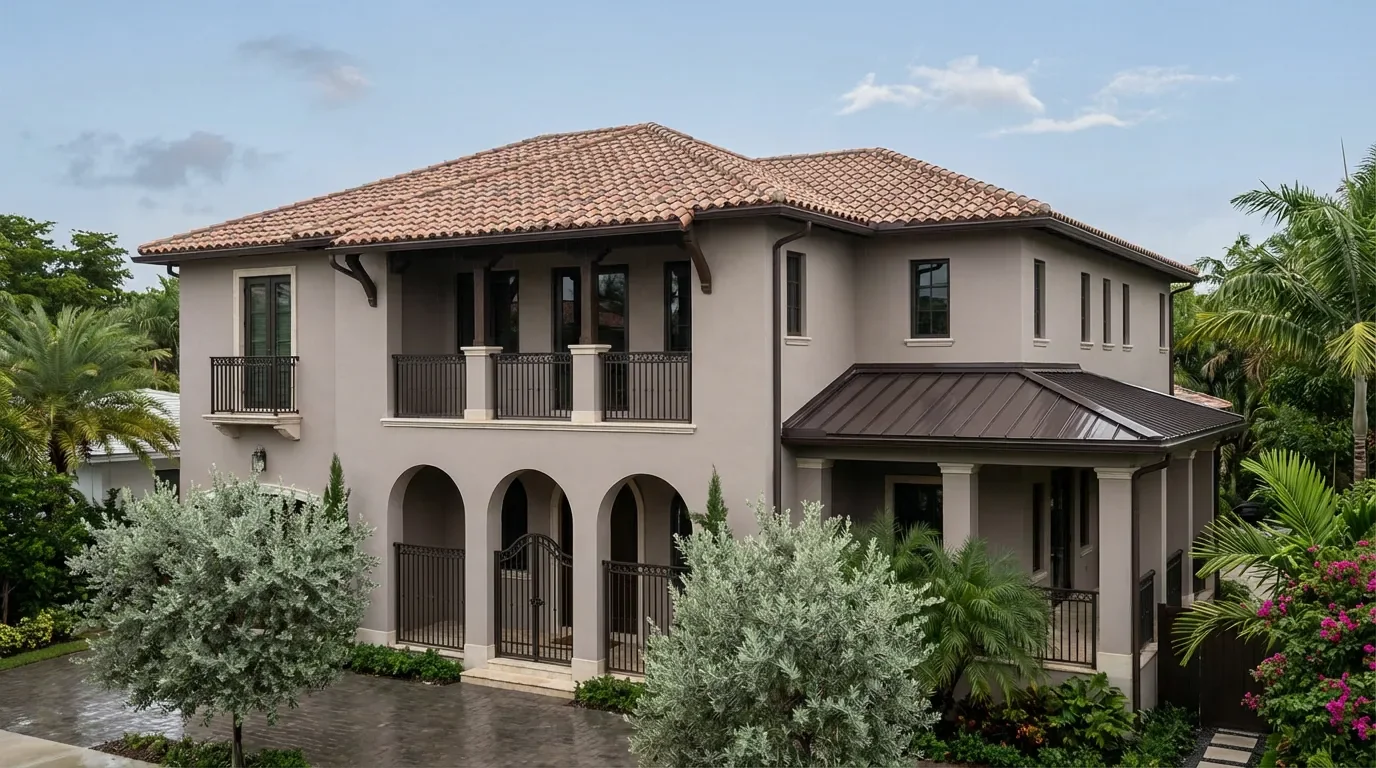
Concrete and clay tile is the most popular roofing material in South Florida, and for good reason. Tile roofs handle UV exposure, salt air, and hurricane winds better than almost any other option.
A properly installed concrete tile roof lasts 40 to 50 years. Clay tile can last even longer. Both materials carry Miami-Dade NOA approvals and meet HVHZ wind standards when installed with the correct fastening method. Tile is also fire-resistant and adds strong resale value in neighborhoods like Coral Gables and Pinecrest, where Mediterranean-style architecture makes tile the expected look. For a deeper look at how tile roofs are installed and inspected in this region, see our full tile roof installation buyer's guide.
The main trade-off is cost. Tile roofs cost more upfront than shingles. They also add significant weight to the roof deck. Concrete tile runs 9 to 12 pounds per square foot, compared to a fraction of that for asphalt shingles. Older homes sometimes need structural reinforcement before tile installation, and that engineering review should always happen before a contract is signed. A tile roof replacement is a bigger project than swapping out shingles (more crew time, more scaffolding, more attention to underlayment) but the long lifespan and lower maintenance costs often make it the better value over 20 to 30 years. If your home can support the weight and your budget allows it, tile is hard to beat in this climate.
Metal Roofing: The Best Option for Coastal Homes
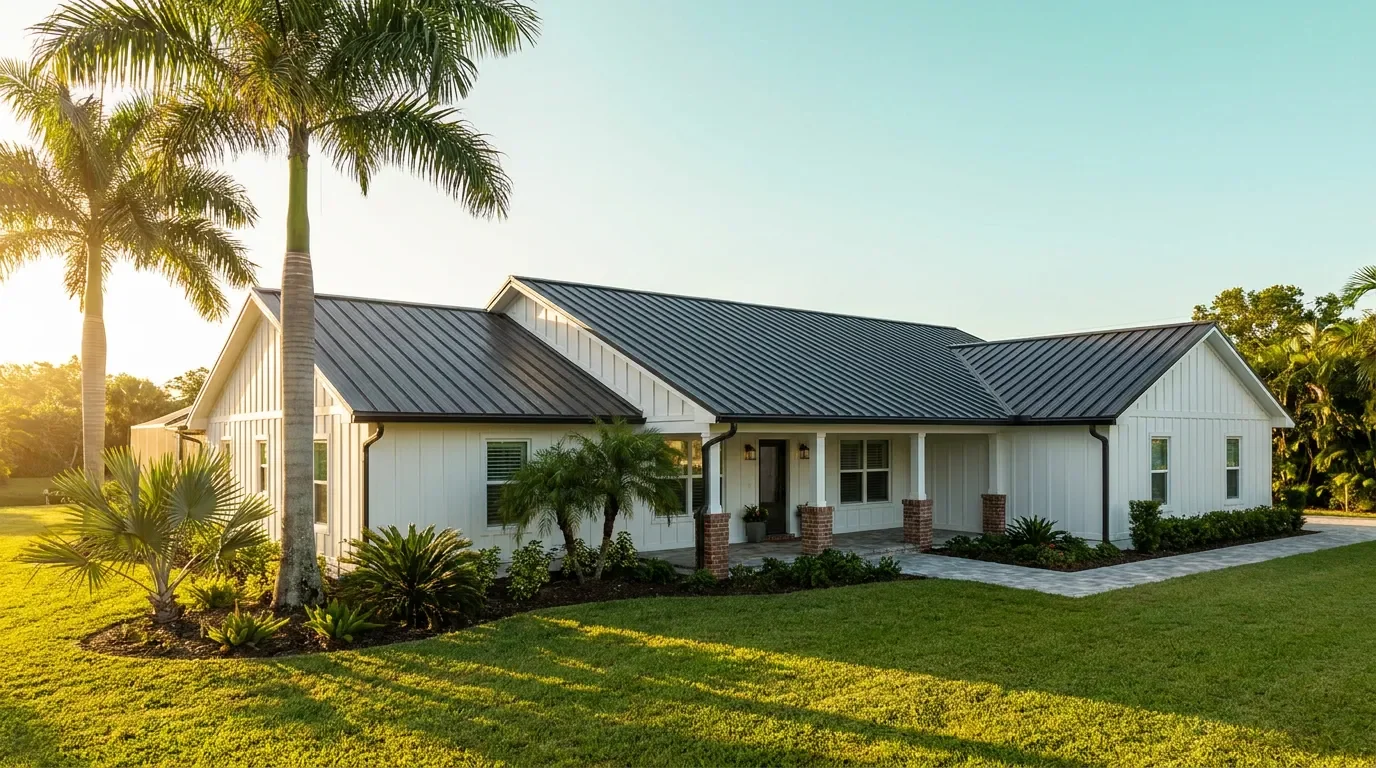
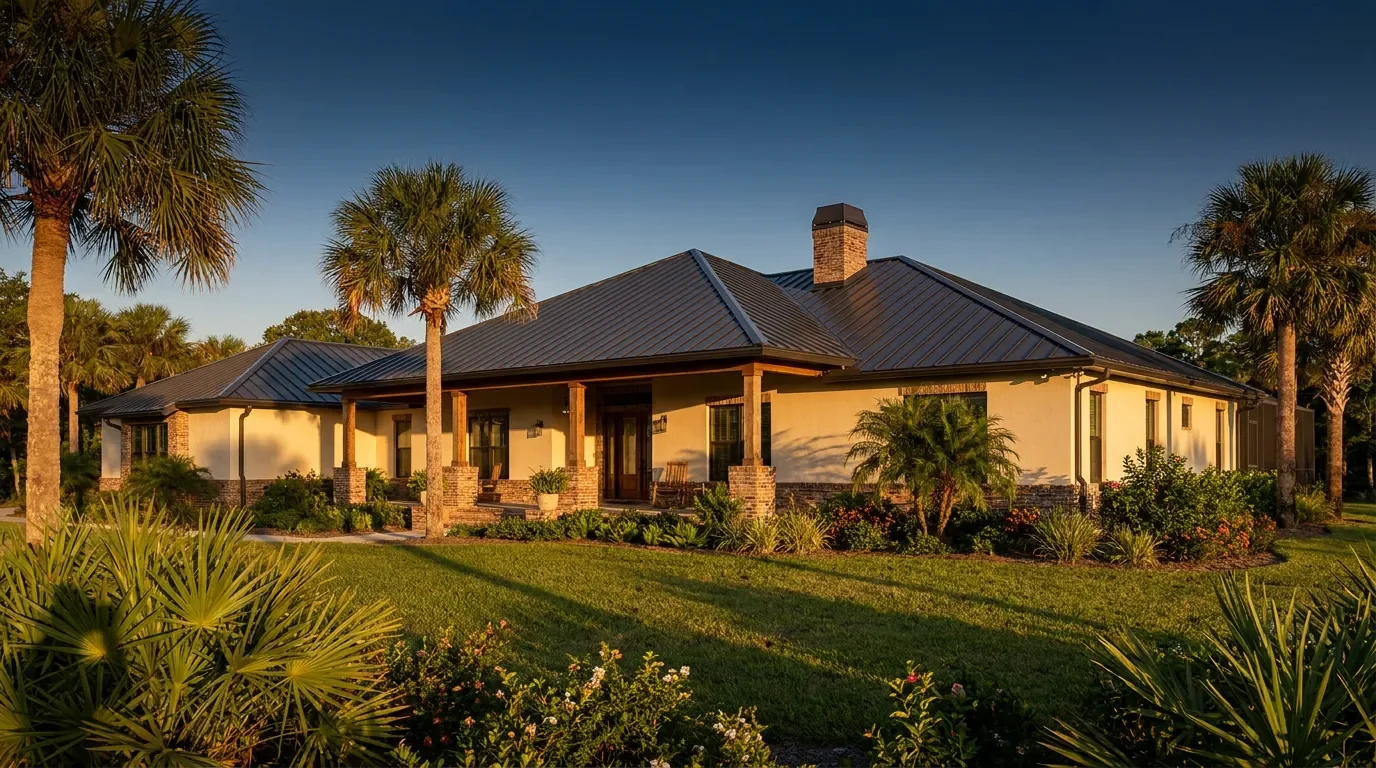
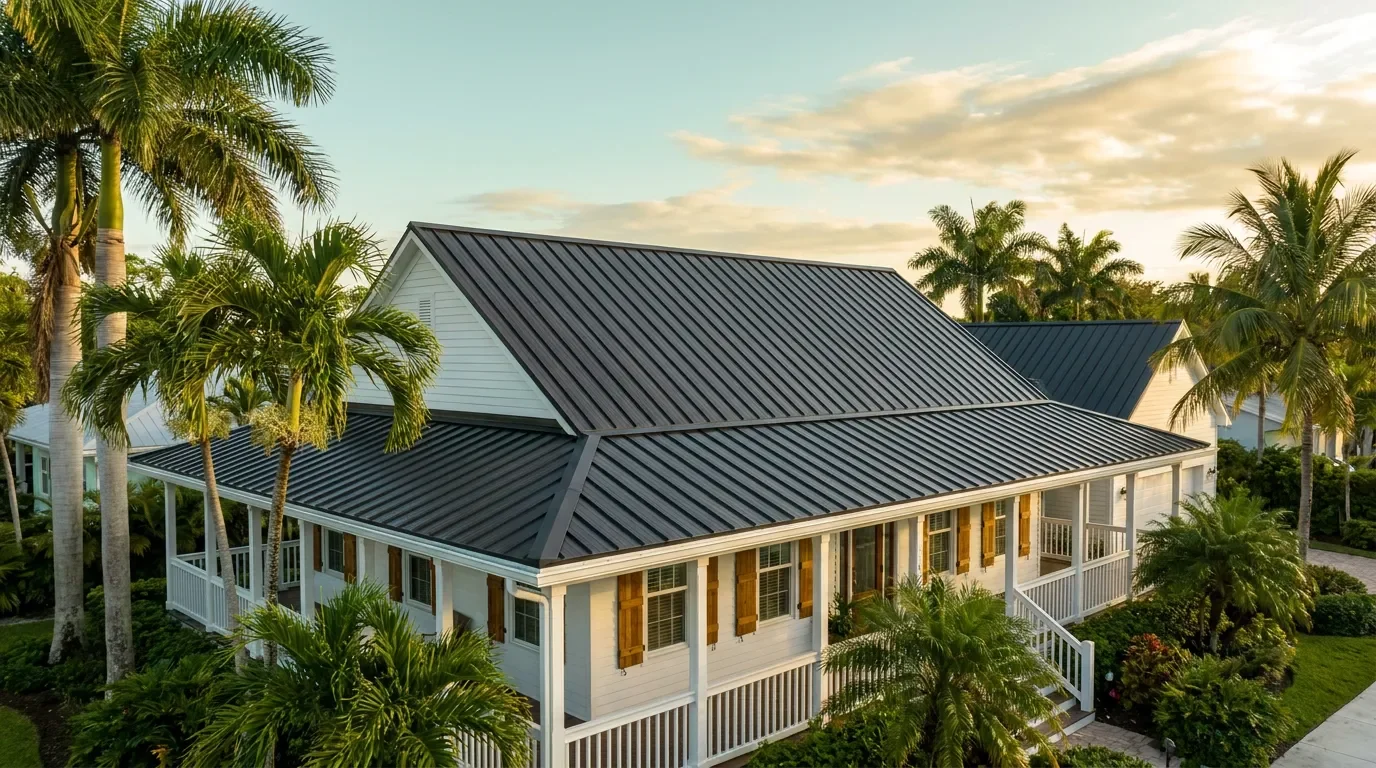
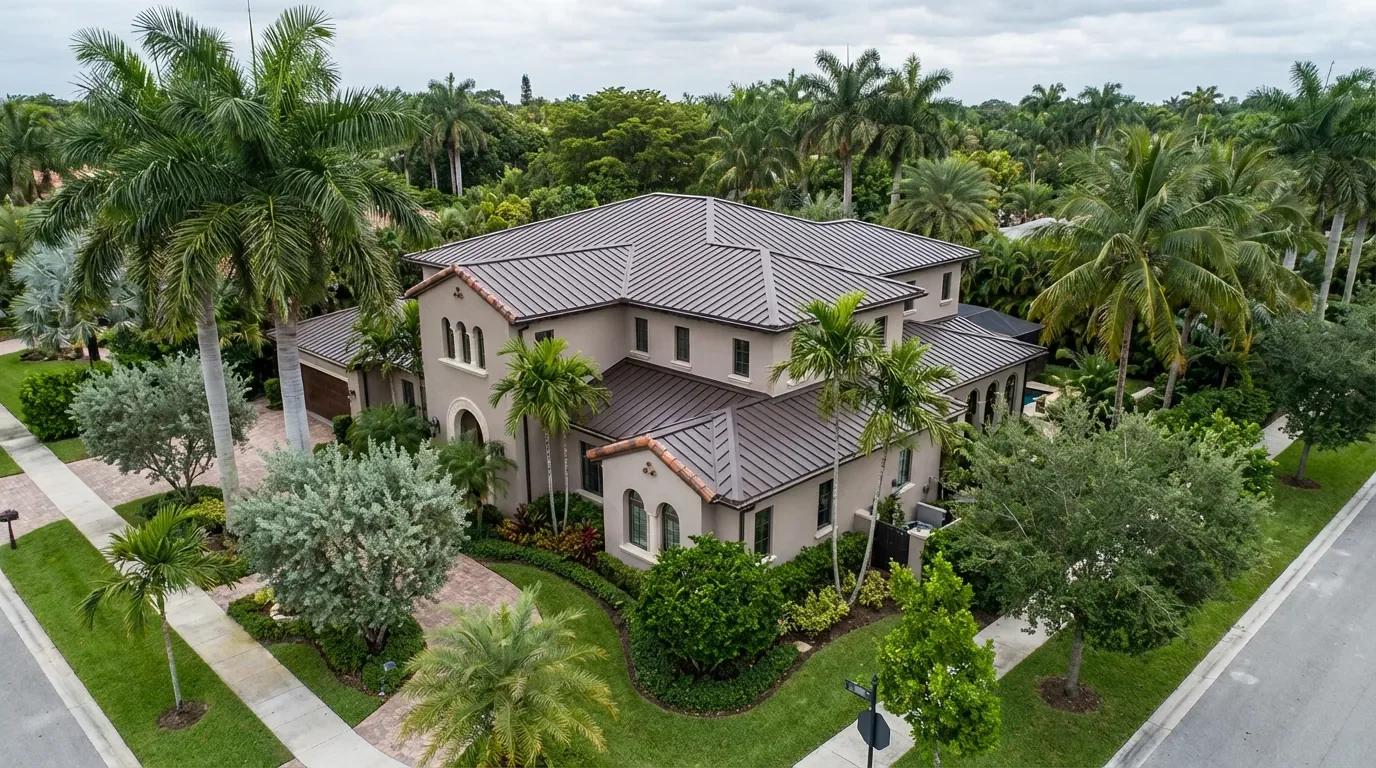
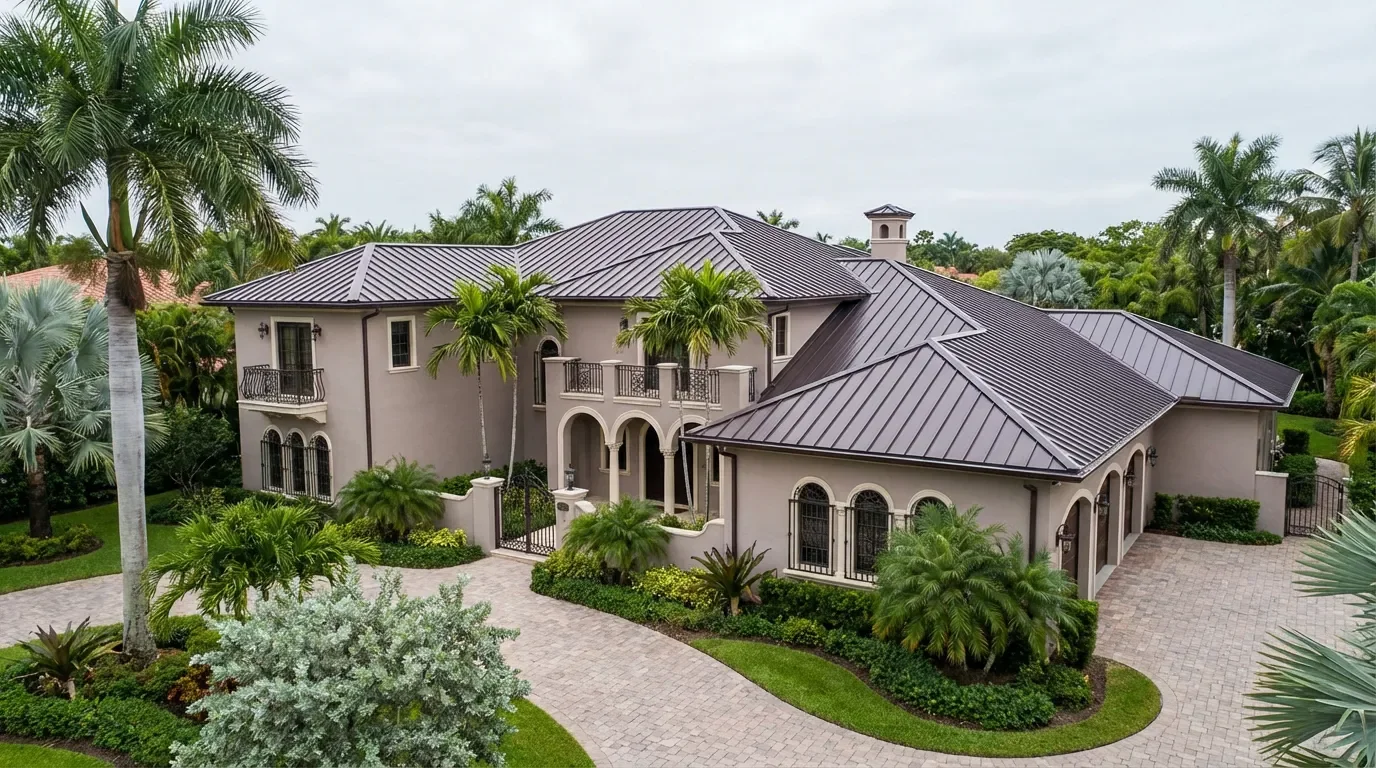
Metal roofing has grown fast in South Florida over the last decade. It is now one of the top answers when homeowners ask what is the best roofing material for coastal properties.
Standing-seam metal roofs offer excellent wind resistance (some systems are rated to 180+ mph) and they reflect UV heat rather than absorbing it. That means lower cooling costs during long South Florida summers. Metal also does not rot, crack, or grow algae the way other materials can in humid conditions, which keeps long-term maintenance minimal even under year-round exposure to salt-laden air.
The key for coastal areas like Miami Beach or Aventura is using the right alloy. Aluminum and Galvalume (zinc-aluminum coated steel) resist salt-air corrosion far better than bare steel, which is why we cover coastal-specific material choices in detail in our salt air roof damage guide. Painted finishes also matter: look for Kynar 500 coatings (a fluoropolymer finish that holds color and resists chalking for decades). Metal roofing costs more than asphalt shingles but less than most premium tile work. It is also lighter than tile, which makes it easier to install on homes without structural upgrades. Metal roofing typically lasts 40 to 60 years with minimal maintenance.
Tile vs. Metal vs. Asphalt Shingles in South Florida
Every South Florida homeowner comparing roofing materials is really weighing the same five variables: how long the material lasts here, how it performs in wind and salt air, how much heat it lets into the attic, how much it weighs on the structure, and what it costs to buy and maintain. The table below lines up concrete tile, standing-seam metal, and HVHZ-rated asphalt shingles side by side across those factors.
| Feature | Concrete Tile | Metal Roofing | Asphalt Shingles |
|---|---|---|---|
| Lifespan (South Florida) | 40–50 years | 40–60 years | 15–20 years |
| Wind resistance | Up to 150+ mph (NOA approved) | Up to 180+ mph (standing seam) | Up to 150 mph (HVHZ-rated, six-nail) |
| Salt-air corrosion resistance | Excellent | Excellent (aluminum/Galvalume) | Moderate: fasteners are the weak point |
| UV / heat reflection | Moderate | High (cool roof coatings available) | Low–moderate (cool-roof lines available) |
| Weight on roof deck | Heavy: may need reinforcement | Light: works on most structures | Light: works on almost any structure |
| Upfront cost | High | Medium–High | Low |
| Typical maintenance | Low (re-seal fasteners every 10 yrs) | Very low | Moderate: more frequent inspection |
Asphalt Shingles: The Budget-Friendly Choice
Asphalt shingles are the most affordable roofing material available. They are also the most common roof type across the broader United States.
In South Florida, however, they face a tougher environment than in cooler climates. UV radiation and heat cause shingles to age faster here, expect 15 to 20 years rather than the 25 to 30 years you might get in Ohio or Tennessee. That said, manufacturers like GAF and Owens Corning produce HVHZ-rated shingle roofing designed specifically for Florida's conditions. These products carry Miami-Dade NOA approval and are installed with six-nail fastening to meet code.
Shingles make sense for homeowners in areas like Homestead or Hialeah who need a code-compliant roof on a tight budget. They are also the right choice when a home's structure cannot support the weight of tile. A shingle roof replacement installs faster than tile and costs less per square foot, often by a significant margin. The trade-off is a shorter lifespan and higher long-term cost when you factor in replacement frequency. If you are planning to sell within 10 years, shingles can be a smart financial move. If you plan to stay 20+ years, tile or metal will likely save money over time.
What Makes a Roofing Material ‘Best’ in South Florida?
- NOA Approval: The material must carry a Miami-Dade Notice of Acceptance (NOA) for use in HVHZ zones. Products without one cannot legally be installed in Miami-Dade or Broward counties.
- Wind Uplift Rating: Look for systems rated to at least 150 mph. Standing-seam metal and NOA-approved tile routinely exceed this threshold.
- UV and Heat Resistance: Materials that reflect solar heat, like light-colored metal or cool-roof rated shingles. Can cut attic temperatures by 20°F or more and lower cooling costs year-round.
- Corrosion Resistance: Homes within a mile of saltwater need materials and fasteners that resist corrosion. Aluminum, Galvalume, and glazed clay tile all hold up well in coastal conditions.
- Lifespan vs. Budget Fit: A tile or metal roof costs more upfront but lasts twice as long as asphalt shingles. Match your material choice to how long you plan to own the home.
How to Choose the Right Roofing Material for Your Home
Check Your Structure
Have a contractor assess your roof deck and framing. Concrete tile weighs 9–12 lbs per square foot. If your home wasn't built for tile, you may need reinforcement before installation.
Confirm Your Budget Range
Get rough cost ranges for tile, metal, and shingles before meeting with contractors. Price per square foot varies significantly across the three material types.
Verify NOA Compliance
Ask your contractor for the NOA number for any product they plan to install. You can verify it in the Miami-Dade NOA database before signing anything.
Match Your Neighborhood Style
Some HOAs and historic districts restrict roofing materials. Coral Gables, for example, has strict design codes. Confirm any restrictions with your HOA or city building department before choosing a material.
Get Multiple Licensed Bids
Always get at least three bids from licensed contractors. You can verify a Florida roofing license at the DBPR license lookup tool before hiring anyone.
What Haven's GC Recommends for Most South Florida Homes
Aldo Dellamano, Haven's licensed General Contractor, says the answer to what is the best roofing material for South Florida usually comes down to three factors: the home's structural capacity, the homeowner's time horizon, and proximity to the coast.
For most inland homes in Miami-Dade, areas like Kendall or Doral, concrete tile is his first recommendation. It is durable, code-compliant, and widely available from local suppliers. For coastal properties or homes that can't support tile weight, standing-seam metal is the top pick. Asphalt shingles are best suited for budget-driven projects or homes that will be resold within 10 years.
Whatever material you choose, installation quality matters as much as the product itself. Choosing the right contractor is just as important as choosing the right material: a licensed roofer who pulls permits, uses NOA-approved products, and follows manufacturer installation specs will outperform a cheaper crew cutting corners on any of the three materials above.
Finally, do not overlook Energy Star roofing products. In South Florida, a cool-roof rated system can reduce annual cooling costs by 10 to 20 percent. Some utility companies offer rebates for Energy Star certified roofing. Combined with the long lifespan of tile or metal, energy savings add up to real money over the life of the roof.
The Florida Building Code requires a permit for any full roof replacement in South Florida. Always confirm your contractor pulls the permit. Unpermitted roof work can void your homeowner's insurance coverage and complicate a future home sale.