Roofing · Storm Damage
Storm Damage Roof Restoration in South Florida
Emergency tarping, insurance claim assistance, and full restoration
A Safeguard Impact company — licensed South Florida contractor with 1,200+ projects completed each year
Get Your Free Estimate
No obligation. We'll respond within 24 hours.
Reviewed by Aldo Dellamano, Licensed General Contractor · Last updated April 2026
Introduction
hurricane, tropical storm, or even a single severe squall can rip shingles off, crack tiles, and open your roof to rain in minutes. Storm damage roof restoration is not a job you can delay. Water moves fast through a compromised deck, soaking insulation, rotting framing, and feeding mold inside walls.
Haven Home Remodeling Group deploys in-house crews across South Florida within hours of a storm. We tarp, inspect, document, and rebuild. We also sit in on adjuster meetings and fight for a full insurance payout — not just a patch.
This page covers everything you need to know: emergency steps, insurance claims, code rules, and how to pick the right contractor after a storm.
Got questions about your roof or bathroom?
Get a free, no-pressure estimate from Haven's licensed Florida team.
South Florida sits inside the High Velocity Hurricane Zone (HVHZ), a designation under the Florida Building Code that covers all of Miami-Dade and Broward counties. The HVHZ sets the toughest wind load rules in the country. Roofing products must carry a Miami-Dade Notice of Acceptance (NOA) before they can be installed. Every storm damage roof restoration in this zone must meet those same rules — even if you are only replacing half the roof. That matters when an insurance adjuster tries to write a low-ball repair estimate. Our broader Roofing services all follow HVHZ code, and storm damage work is no different.
“South Florida sits inside the High Velocity Hurricane Zone (HVHZ), a designation under the Florida Building Code that covers all of Miami-Dade and Broward counties.”
Haven has over 30 years of South Florida construction skill behind every job. Our general contractor, Aldo Dellamano, leads 20 full-time in-house crews. We pull more than 1,500 permits per year. We know what inspectors want. We know what adjusters try to cut. And we know how to get your roof rebuilt to code, fast.
Act Within 24–48 Hours
Storm damage roof restoration must begin with emergency tarping within 24 to 48 hours. Delays void some insurance policies and let water spread far beyond the original breach.
What You Get
What Storm Damage Roof Restoration Covers
Emergency Tarping
We secure heavy-duty poly tarps over the damaged area fast. This stops water from entering and protects your insurance claim photo documentation.
Wind Damage Repair
High winds peel shingles, lift tile, and tear off ridge caps and flashing. We replace every compromised component — not just the visible ones.
Hail Damage Repair
Hail bruises shingle mats and cracks tile glazing. The damage is often invisible from the ground but causes premature failure within a year.
Deck and Framing Repairs
Water that sits on a damaged deck rots plywood and weakens rafters. We replace decking and repair frame members before any new roofing goes on.
Insurance Claim Assistance
We write a full scope of loss, attend your adjuster meeting, and review the insurer's estimate line by line to catch missing items.
Code-Required Upgrades
Florida law requires that certain code upgrades be made when storm damage triggers a permit. We handle every upgrade so your final inspection passes.

In the Field
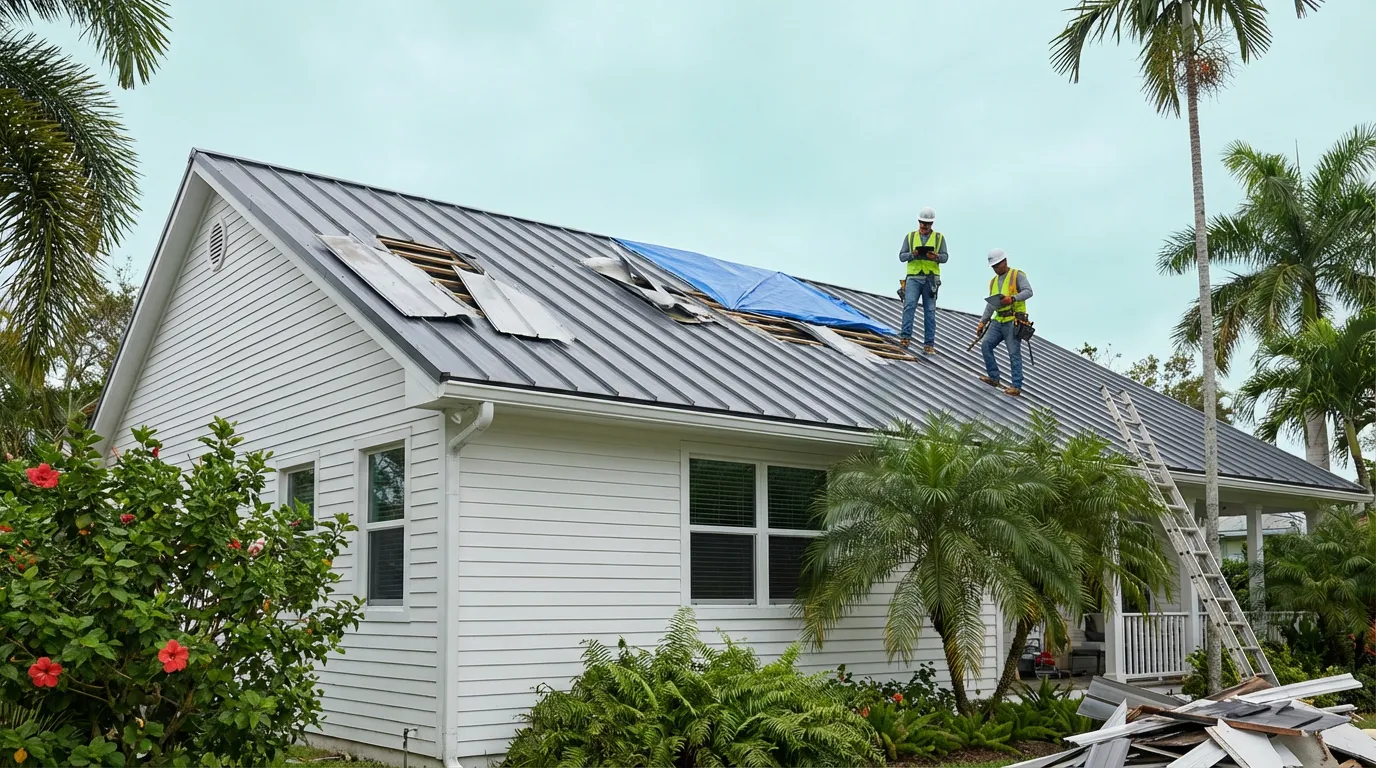
Post-storm roof inspection before tarping and restoration
Haven crew installing storm damage restoration materials on a Miami, FL home — detail of underlayment and fastener pattern
Wind damage and hail damage look different on a roof, and adjusters are trained to separate them. Wind lifts shingles from the edges and tabs. It rips ridge caps. It tears flashing away from walls and chimneys. You will see missing shingles, exposed felt, and bare decking in the worst cases. Hail damage is subtler. On asphalt shingles, hail knocks granules loose and leaves dark bruise marks on the mat underneath. On concrete or clay tile, it chips glaze and causes micro-cracks that grow with heat cycles. Both types of damage can lead to leaks — but the repair scope and cost are very different.
“For shingle roofs, storm damage roof restoration may call for a partial or full replacement using impact-resistant shingles rated Class 4.”
For shingle roofs, storm damage roof restoration may call for a partial or full replacement using impact-resistant shingles rated Class 4. Our Shingle Roofing page covers product lines from GAF, Owens Corning, and CertainTeed. For tile roofs, we assess whether individual tiles can be replaced or whether a full Tile Roof Replacement is the smarter call. When damage is widespread, a full Shingle Roof Replacement or even an upgrade to Metal Roofing may be the best long-term answer. A standing seam metal system, for example, can survive 150+ mph winds and often earns a lower insurance premium going forward.
Process
Our Storm Damage Restoration Process
- 1
Emergency Dispatch and Tarping
We respond within hours. Our crew secures the roof with commercial-grade tarps, stopping active leaks. We document all damage with photos and measurements before any work begins.
- 2
Full Damage Inspection
A licensed inspector walks every square foot of the roof. We check decking, framing, flashing, gutters, and attic below. We note storm damage that is not visible from the ground.
- 3
Scope of Loss and Insurance Filing
We write a full scope of loss using industry-standard pricing software. We submit it to your insurer and attend the adjuster meeting with you.
- 4
Permit and Material Order
Once the claim is approved, we pull the permit from your local building department. We order HVHZ-rated materials. Permit approval usually takes 5 to 10 business days.
- 5
Restoration and Final Inspection
Our crews complete the storm damage roof restoration in full. We schedule the final building inspection, receive the certificate of completion, and close out your file.
Filing an insurance claim after storm damage is stressful. Adjusters work for the insurance company — not for you. They often miss items, use low unit prices, or mark damage as pre-existing wear. Haven's team knows how to counter those moves. We bring our own scope of loss to every adjuster meeting. We cite HVHZ code rules that require full replacements when damage passes a set threshold. We document every item with photos and measurements. If your insurer underpays, we can help you request a re-inspection or work with a public adjuster.
One rule South Florida homeowners often miss: the Florida Building Code says that if more than 25% of a roof is replaced, the entire roof must be brought up to current code. That rule can add cost — but it also means your insurer must fund those upgrades if storm damage is the cause. We know how to write that into your claim. The Florida Building Code is on your side when you know how to use it.
“One rule South Florida homeowners often miss: the Florida Building Code says that if more than 25% of a roof is replaced, the entire roof must be brought up to current code.”
For storm damage work in the urban core — Miami Storm Damage, Hialeah Storm Damage, and Doral Storm Damage — older homes often trigger full code upgrades to decking fasteners, drip edge, and underlayment. We price all of that into the claim up front so there are no surprises.
Code Upgrades Are Covered
When storm damage triggers a permit in Miami-Dade or Broward, your insurer must fund all required code upgrades — including deck fastening, drip edge, and underlayment. We make sure those items are in your claim.
Ready to talk to a real local expert?
Tell us about your project — we respond within 24 hours.
Side-by-Side
Repair vs. Full Roof Replacement After Storm
| Feature | Targeted Storm Damage Repair | Full Roof Replacement |
|---|---|---|
| Best for | Damage under 25% of total roof area | Damage over 25% or widespread wear |
| Permit required | Usually yes — even for repairs | Yes — full permit and inspection |
| Insurance payout | ACV or RCV for affected sections | Full RCV if damage meets threshold |
| Code upgrades | Required if >25% is touched | Full HVHZ upgrade required |
| Lifespan gained | Extends existing roof life | Full 25–50 year new-roof lifespan |
| Best material options | Match existing shingle or tile | Upgrade to impact-resistant or metal |
By the Numbers
Haven Storm Restoration by the Numbers
1,500+
Permits Per Year
More permits than any single-trade roofer in our market
20
In-House Crews
No subcontractors, no day labor — ever
Under 3%
Warranty Callback Rate
Industry average is 8–12%
30+ Years
South Florida Skill
Led by GC Aldo Dellamano
Storm damage roof restoration needs vary by neighborhood. Coastal communities like Miami Beach Storm Damage and Aventura Storm Damage face salt air on top of wind loads. Salt eats flashing, corrodes fasteners, and degrades sealants faster than inland homes. We use stainless steel fasteners and sealed drip edge in these zones as standard practice.
Historic neighborhoods need extra care. In Coral Gables Storm Damage, city design rules often govern materials and colors. We pull approvals from the Coral Gables Historic Preservation Board when needed. Mature trees in Coconut Grove and Coral Gables also mean debris impact is a bigger risk than raw wind speed. Suburban areas — Kendall Storm Damage, Cutler Bay Storm Damage, Miami Lakes Storm Damage, and North Miami Storm Damage — usually deal with standard wind uplift and hail. These are often full-replacement jobs when roofs are 15 or more years old.
“In South Miami-Dade, Homestead Storm Damage homeowners know better than most what a direct hit looks like — Hurricane Andrew made landfall here in 1992.”
In South Miami-Dade, Homestead Storm Damage homeowners know better than most what a direct hit looks like — Hurricane Andrew made landfall here in 1992. The National Hurricane Center still uses Andrew as a benchmark for catastrophic landfalls. Roofs in this area were rebuilt under early HVHZ rules and are now aging out. Many storm damage calls in Homestead turn into full Roof Replacement projects.
Not sure what your project should cost?
Free, itemized estimates from Haven. No obligation, no sales pressure.

In the Field
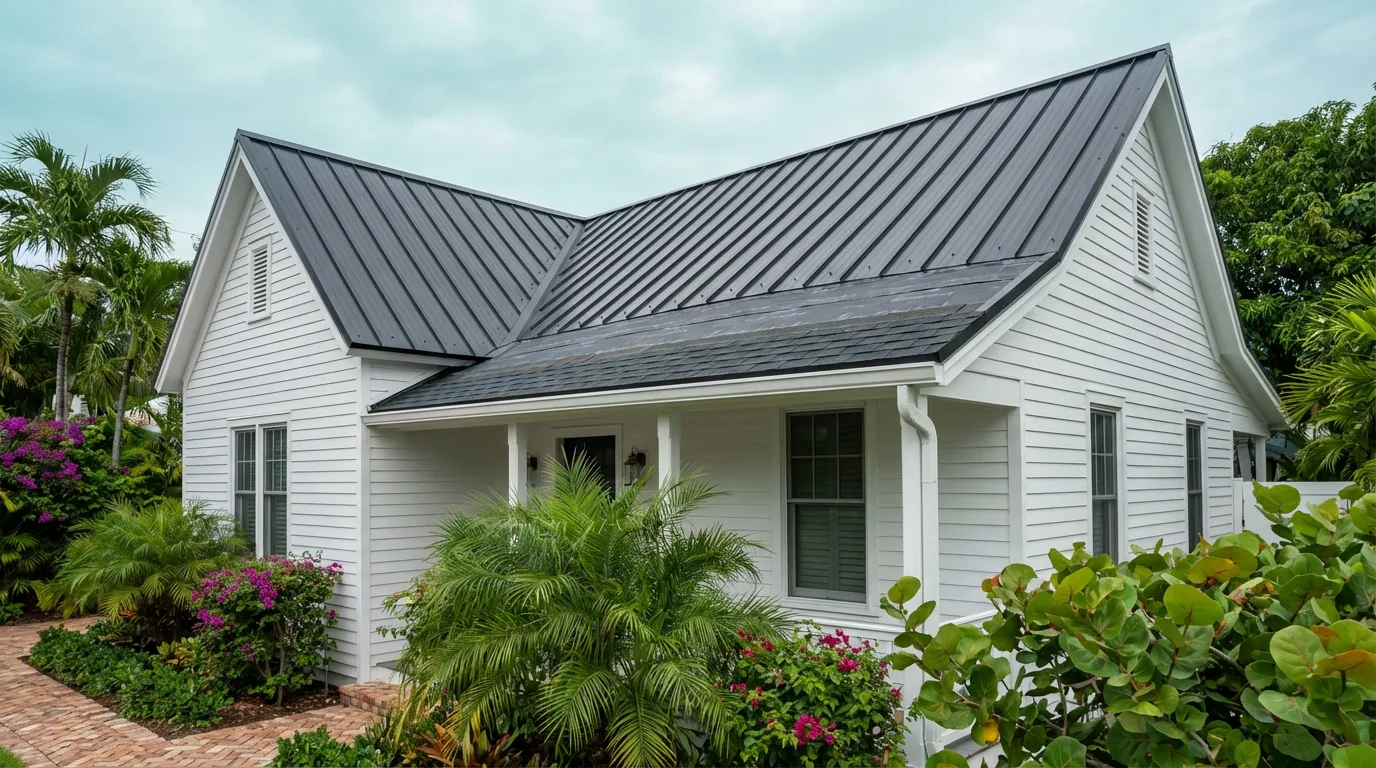
HVHZ-rated underlayment and shingles after storm repair
Aerial view of a completed storm damage restoration on a Miami, FL home showing clean seams and tropical landscaping
Haven's Permit Track Record
Haven averages more than 1,500 permits pulled per year — that is how we maintain a perfect record of code compliance across two verticals and five counties.
Not every storm-damaged roof needs a full tear-off. A Roof Repair is the right call when damage is limited to a small area, the deck is solid, and the rest of the roof has many years of life left. We assess shingle age, granule loss, and deck condition before we recommend anything. If your roof is under 10 years old and damage covers less than 20% of the surface, a targeted repair is often the best value.
“If your roof is under 10 years old and damage covers less than 20% of the surface, a targeted repair is often the best value.”
If damage covers more than 25% — or if your roof is over 20 years old — the math usually favors full replacement. HVHZ code often requires it anyway. A new roof also comes with a full manufacturer warranty on materials and Haven's lifetime workmanship warranty. For homes that want the strongest possible wind resistance, we often recommend upgrading to metal during the restoration. A standing seam system from a top brand can handle 175+ mph winds and lasts 50 years or more. It also qualifies for Florida's wind mitigation credits, which lower your homeowner's insurance premium every year.
Common Questions
Storm Damage Restoration FAQs
Helpful Reads
Roofing Guides for South Florida
Roofing
HVHZ Roofing Requirements Florida: What Every Homeowner Must Know
If a contractor has mentioned HVHZ, you need to understand exactly what it means for your roof. South Florida's High-Velocity Hurricane Zone imposes the strictest residential roofing code in the United States — and non-compliance can void your insurance.
Read articleRoofing
Shingle Roofing in South Florida: Complete Homeowner Guide
Shingle roofing in South Florida requires more than a trip to the hardware store — hurricane codes, NOA approvals, and local permit rules all apply. This guide covers everything a homeowner needs to know before calling a contractor.
Read articleRoofing
What Is Modified Bitumen Roofing? A South Florida Guide
Modified bitumen roofing is one of the most reliable flat-roof systems in South Florida — engineered to handle hurricane-force winds, UV radiation, and tropical heat. Here's everything homeowners need to know.
Read articleContent Disclosure
This article is provided for general information only and reflects current Florida Building Code requirements, common South Florida construction practices, and Haven's field experience. Actual project costs, permit requirements, material availability, and timelines vary based on your home, municipality, and project scope. Florida law requires that any residential construction work over $1,000 be performed by a licensed contractor — always consult a Florida-licensed contractor before starting a roofing or bathroom remodel and verify credentials at myfloridalicense.com. This guidance is not a substitute for a project-specific estimate or on-site evaluation by a licensed professional.