Why Aging in Place Modifications Matter in South Florida
Bathroom accessibility renovations in South Florida must meet the Florida Building Code (FBC) and, for features like grab bar blocking, must follow the structural requirements set by ADA Standards, even in private residences when designed to those specs. Miami-Dade and Broward counties have large and growing senior populations. According to U.S. Census data, roughly 20% of Miami-Dade residents are 65 or older, and that share keeps climbing. That means more homeowners are asking what changes are actually worth making, not just cosmetic upgrades, but structural improvements that cut fall risk.
Most falls happen at predictable moments: stepping over a tub wall, reaching for a towel on a slippery floor, or standing up from a toilet without anything to hold. Smart aging in place bathroom modifications target those exact moments. They replace hazardous fixtures with safer ones. They add grip and support exactly where a body needs it. And when done right, they blend into the bathroom design so guests never notice anything changed.
Haven's licensed team has completed accessibility projects across Miami, Coral Gables, Kendall, and beyond. Aldo Dellamano, Haven's licensed General Contractor, says the most common mistake homeowners make is waiting too long. By the time a fall happens, the renovation becomes urgent, and rushed work costs more and looks worse.
The Most Impactful Aging in Place Bathroom Modifications
Not all modifications carry equal weight. Some changes look good on paper but don't move the needle on safety. Others are inexpensive, quick to install, and dramatically reduce risk. The modifications below are ranked by how much they actually help, based on injury data and real project outcomes from Haven's accessibility crews.
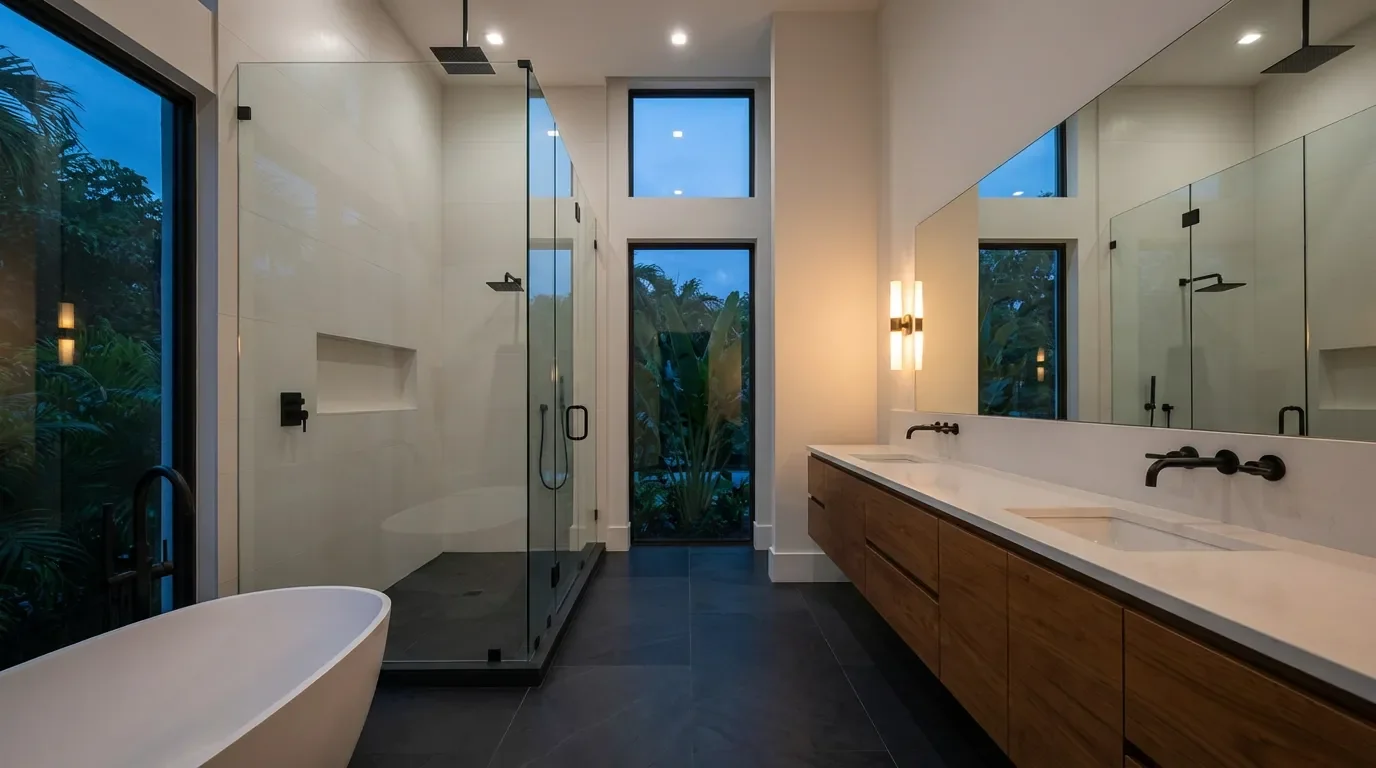
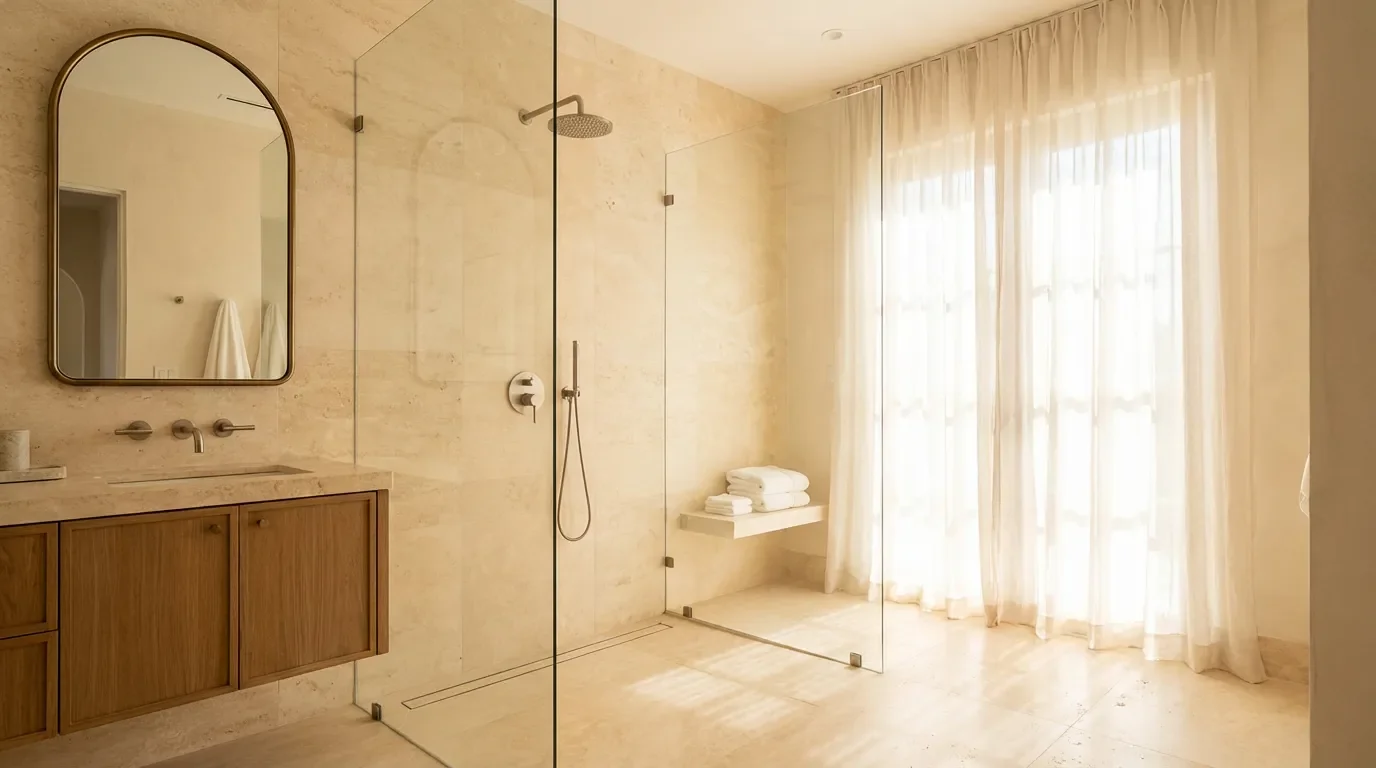
The single biggest upgrade is eliminating the tub entry barrier. A standard tub wall sits 14–18 inches high. Stepping over it on a wet floor, especially after a shower, is where most falls begin. A tub-to-shower conversion removes that barrier entirely and replaces it with a low-threshold or zero-threshold (curbless) entry. Curbless showers are now the gold standard for accessible design. They also look modern and are easier to clean, a win for any homeowner, not just seniors.
The second-highest-impact change is grab bar installation with proper blocking. A grab bar screwed only into drywall will pull out under body weight. The FBC and Schluter Systems both emphasize that bars must anchor into studs or a reinforced backer board rated to hold at least 250 lbs of force. Haven installs solid blocking behind the tile during the rough-in phase so bars can be added or repositioned later without opening the wall.
Top Aging in Place Bathroom Modifications by Impact
- Curbless walk-in shower: Eliminates the tub step, the #1 fall point. A zero-threshold entry works with a wheelchair and looks sharp in any bathroom style. See Haven's walk-in shower options for South Florida.
- ADA-compliant grab bars: Mounted at the toilet, shower entry, and inside the shower. Must anchor into blocking or studs, never drywall alone. Bars should be 1.25–1.5 inches in diameter for proper grip.
- Comfort-height toilet: Sits 17–19 inches from floor to seat, about 2–4 inches taller than standard. This height matches a chair and reduces knee and hip strain when sitting down or standing up.
- Non-slip flooring: Textured porcelain tile rated Coefficient of Friction (COF) 0.60 or higher performs well on wet South Florida bathroom floors. Avoid polished marble or smooth porcelain in high-risk zones.
- Fold-down shower bench: A teak or solid-surface fold-down seat lets users shower seated when needed. It stays flush against the wall when not in use, keeping the shower open and spacious.
Flooring and Lighting: Often Overlooked, Always Important
Flooring choice is one of the most underrated parts of an accessible bathroom. South Florida homeowners often want large-format tile. It looks clean and modern. But large tiles mean fewer grout lines, which means less natural grip. The fix is choosing a textured or matte-finish tile with a wet COF (Coefficient of Friction) rating above 0.60 per ANSI A137.1 standards. Check the Florida Building Code requirements for residential wet areas before specifying any tile.
Lighting matters just as much as flooring. Poor lighting makes it hard to judge depth and distance. Exactly the skills needed to step into a shower or navigate around a vanity. Motion-activated night lights along the baseboard eliminate the need to find a light switch at 2 a.m. LED strip lighting under the vanity toe-kick adds gentle ambient light without glare. These are small changes with big impact.
Haven frequently pairs flooring and lighting upgrades with a full bathroom remodel so clients get cohesive results rather than piecemeal fixes. Whether you're in Coral Gables or Kendall, the approach is the same: fix the hazards first, then make it beautiful.
Standard Bathroom vs. Accessible Bathroom
| Feature | Standard Bathroom | Accessible Bathroom |
|---|---|---|
| Shower entry | 14–18" tub wall or curbed shower | Zero-threshold curbless entry |
| Toilet height | 15" standard height | 17–19" comfort height |
| Grab bars | None | Anchored at toilet, shower entry, and interior |
| Floor texture | Polished tile, COF below 0.50 | Matte or textured tile, COF 0.60+ |
| Lighting | Single overhead fixture | Layered: overhead + night lights + task lighting |
| Turning radius | Under 48": no wheelchair clearance | 60" clear turning radius per ADA guidelines |
How to Plan Your Aging in Place Bathroom Remodel
- Assess your specific risk points: Walk through your bathroom and note every moment you touch a wall for balance. Those are your installation targets. Common spots: tub entry, toilet rise, shower interior, and the step from tile to bath mat.
- Set a budget range early: A grab bar and non-slip floor upgrade can run $1,500–$3,000. A full curbless shower conversion runs $6,000–$12,000 depending on tile and scope. Read our bathroom remodel cost guide to set realistic expectations before calling a contractor.
- Pull the right permits: Any structural work: moving walls, relocating drains, or installing a new shower pan, requires a permit in Miami-Dade and Broward counties. Haven handles all permitting. Unpermitted work can void homeowner's insurance and create problems at resale.
- Choose a licensed contractor: Verify your contractor holds an active Florida license via the DBPR license lookup. Accessibility work involves plumbing, tile, and structural blocking. It is not a one-trade job. Haven's crews handle all three.
- Plan for the future, not just today: Install blocking for grab bars even if you don't need them now. Add a bench rough-in while the tile is off. These decisions cost almost nothing during construction and save thousands later. Good aging in place design anticipates the next 20 years.
What Haven's Accessibility Remodels Look Like in Practice
Haven has completed accessibility bathroom projects throughout South Florida, from Miami Beach condos to single-family homes in Homestead. The scope varies, but the process is consistent. An on-site assessment identifies every hazard. A design plan addresses each one with the right product and installation method. Then Haven's crew pulls permits, completes the work, and schedules a final inspection.
Installation quality matters for accessibility work specifically. A grab bar that loosens six months after install, or grout that cracks and lets water under the tile, defeats the purpose of the remodel. Tight installation quality is not optional. It's the whole point.
For homeowners in cities like Miami Lakes or North Miami, Haven offers free on-site estimates. The estimate includes a written scope, a material list, and a projected timeline, no vague quotes. That transparency is how Haven earns the trust needed for projects that directly affect a family member's safety and independence.
Small Changes That Add Up Fast
Not every aging in place bathroom modification requires a full demo. Some of the most effective upgrades are quick wins. A handheld showerhead on a sliding bar lets users adjust height easily, critical for seated showering. A lever-style faucet handle is far easier to operate with arthritic hands than a round knob. A pressure-balance valve (a valve that stops sudden temperature swings) prevents scalding, which is a real risk for anyone with reduced sensation.
These small changes rarely require permits. They do require proper installation. A showerhead bar needs to anchor into a stud or blocking, not just a hollow wall. The same principle applies to toilet safety frames. A bolt-on frame that clamps to the toilet base is only as secure as the toilet itself. A wall-mounted grab bar at toilet height is always the stronger choice.
If you're unsure where to start, Haven's team can walk through your space and prioritize by risk level. Some clients need a single afternoon of work. Others need a full redesign. Both outcomes are valid, and both are worth doing right. Learn more about mold prevention, a related concern in Florida bathrooms, in our Florida bathroom mold prevention guide.