What Is Tile Roof Installation in South Florida?
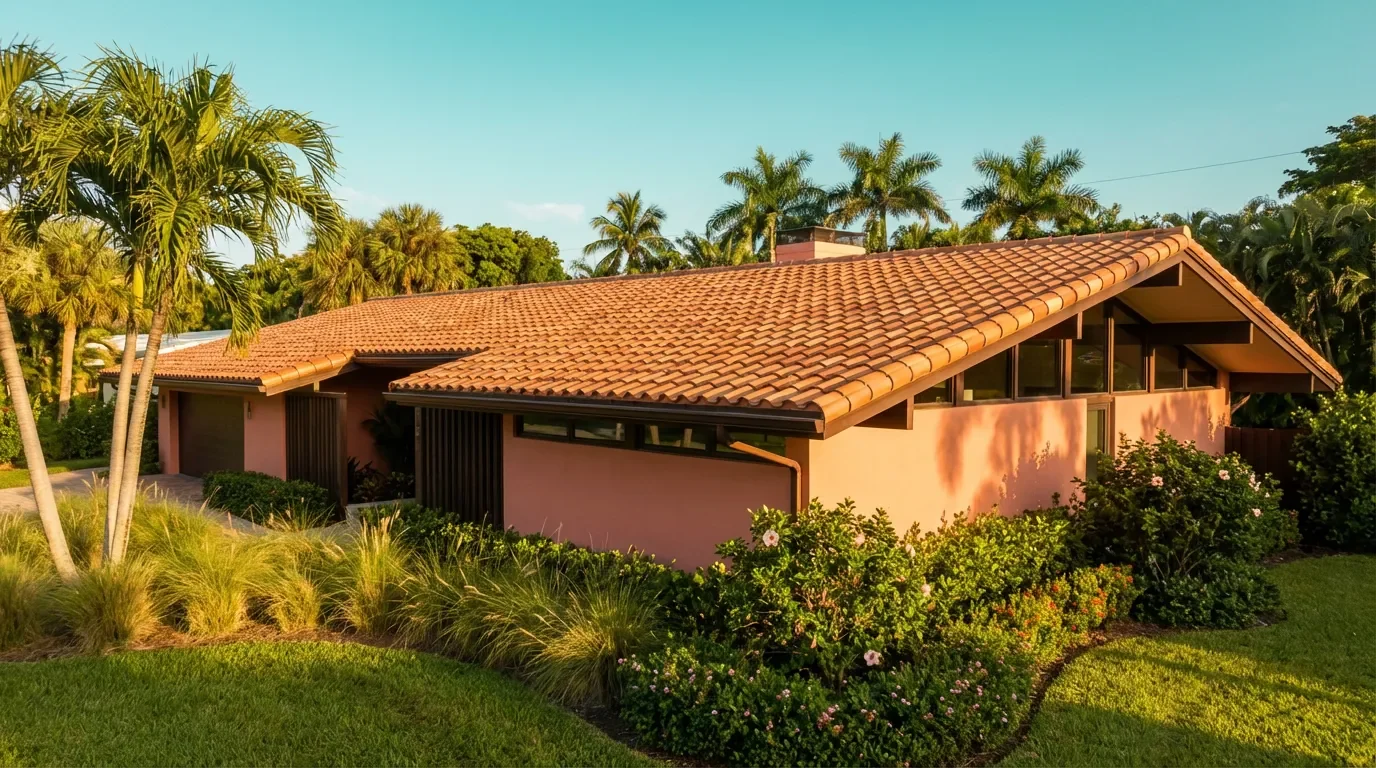
Tile roof installation in South Florida must comply with the Florida Building Code and, in Miami-Dade and Broward counties, the HVHZ (High-Velocity Hurricane Zone) standards, the strictest residential roofing code in the United States. Every tile product used in HVHZ must carry a Miami-Dade Notice of Acceptance (NOA), proving it has survived 175+ mph wind uplift testing. A tile system is not simply tile on a deck. It is a layered assembly: the structural deck, a high-temperature self-adhered underlayment (the true waterproofing membrane), approved fasteners, and the tile itself. Tiles are heavy: concrete tile runs 9 to 12 pounds per square foot, and clay tile ranges from 6 to 10 pounds per square foot. That load must be engineered into the roof structure before installation begins. Skipping a structural load analysis on a home built before 1994 is one of the most common and costly oversights in South Florida tile projects.
Concrete Tile vs. Clay Tile: Side-by-Side
| Feature | Concrete Tile | Clay Tile |
|---|---|---|
| Lifespan | 40–50 years | 50–100+ years |
| Weight (per sq ft) | 9–12 lbs | 6–10 lbs |
| Cost (installed) | $12–$18 per sq ft | $18–$30 per sq ft |
| Color stability | Fades over 10–15 years | Color baked in, permanent |
| Salt-air resistance | Good with sealer | Excellent, non-porous |
| HOA acceptance | Very common | Common in premium areas |
Concrete vs. Clay: Which Tile Is Right for You?
2 out of 3 tile installations in South Florida use concrete tile, primarily because it costs 30 to 50 percent less than clay at the point of purchase. Concrete tile is manufactured locally, comes in hundreds of profile and color options, and meets HVHZ uplift requirements when properly fastened. The tradeoff is longevity and appearance. Concrete is porous: it absorbs moisture and algae over time, causing the surface color to fade within 10 to 15 years. Clay tile is kiln-fired, which makes it non-porous, salt-air resistant, and virtually fade-proof. In coastal cities like Miami Beach and Aventura, clay tile's resistance to salt spray is a meaningful performance advantage that justifies the higher cost. For inland communities (think Weston, Coral Springs, or Pembroke Pines) concrete tile typically delivers the best value per dollar. The right choice depends on your budget, HOA requirements, and how close you are to the coast.
Tile Roofing by the Numbers
How Tile Performs in a Hurricane
75 percent of tile-related storm damage in South Florida involves individual tiles that crack or dislodge, not the system failing to keep water out. That distinction matters enormously. When a tile breaks or lifts during a storm, the underlayment beneath it is the layer that prevents water intrusion into the attic and living space. A self-adhered modified bitumen (SBS) or peel-and-stick underlayment rated for HVHZ conditions can hold a roof watertight even after losing 20 to 30 percent of its tiles. The National Hurricane Center consistently shows that homes with properly installed underlayment suffer far less interior damage than homes where underlayment was cut short on quality. Haven's crews install HVHZ-compliant underlayment on every tile roof replacement, using products that carry current Miami-Dade NOA numbers. The fastening pattern matters too. HVHZ code requires a minimum 6-nail pattern and specific tile-to-batten attachment methods. Cutting corners on fasteners is the most common reason tiles become projectiles during a storm.
Structural Load: A Step You Should Never Skip
9 to 12 pounds per square foot may not sound like much, but on a 2,000-square-foot roof, concrete tile adds 18,000 to 24,000 pounds of dead load to the structure. Homes built after 1994 in South Florida were typically engineered to handle this weight under the post-Hurricane Andrew building codes. Homes built before 1994 (common in older Miami neighborhoods, parts of Fort Lauderdale, and much of Homestead) may have trusses or rafters sized for a much lighter shingle system. Installing tile over an under-engineered structure voids the manufacturer's warranty, creates a permit inspection failure, and can cause structural deformation over time. A qualified contractor should pull the original permit drawings or perform a current structural assessment before any tile system is specified. Haven's estimators flag this on every pre-installation visit. If the structure needs reinforcement, that work happens before any material is ordered, never after.
How a Tile Installation Project Unfolds
- Structural assessment: A licensed contractor reviews your existing deck and framing to confirm it can support tile's dead load, especially critical for homes built before 1994.
- Material and profile selection: You choose between concrete and clay, select the profile (flat, low-barrel, S-curve), and confirm the color option meets any HOA approval requirements.
- Permit pull and NOA verification: Your contractor pulls the building permit and verifies that every product: tile, underlayment, fasteners, carries a current Miami-Dade NOA for HVHZ use.
- Deck and underlayment installation: Old material is torn off, the deck is inspected and repaired, and the HVHZ-rated underlayment is installed. This is the waterproofing layer that matters most.
- Tile installation and inspection: Tiles are set using the code-required fastening pattern. A building inspector signs off before the job is closed out. Always verify a final inspection was completed.
Tile vs. Shingle vs. Metal: Cost and Value
A standard shingle installation in South Florida runs $8 to $12 per square foot installed, compared to $12 to $30 for tile and $15 to $25 for metal. Shingles carry a 25 to 30-year lifespan in Florida's UV and heat, considerably shorter than tile's 40 to 50 years. Our roofing cost guide breaks down per-material pricing in detail. Metal offers the best pound-for-pound wind resistance and weighs only 1 to 3 pounds per square foot, making it a strong choice for older structures. However, tile remains the dominant choice in South Florida HOA communities because governing documents frequently require it by name. If your shingle roof replacement is coming due and tile is an option, the long-term math generally favors tile: one tile system often outlasts 2 full shingle cycles. For a complete comparison of materials, our best roofing material guide covers every major option available in the region.
Key Questions to Ask Before Choosing a Tile Contractor
- Are your products NOA-approved?: Every tile, underlayment, and fastener must carry a current Miami-Dade NOA for HVHZ use. Ask to see the product approval numbers before signing a contract.
- Will you pull the permit?: Permitted work protects you at resale and ensures a building inspector verifies the installation. Any contractor who suggests skipping the permit is a red flag.
- Do you perform a structural check?: Tile's dead load must be confirmed against your existing framing before material is ordered, especially for pre-1994 homes.
- What underlayment system do you use?: Specify a self-adhered, HVHZ-rated underlayment, not a felt underlayment that can degrade in South Florida's heat and moisture in under 10 years.
- What does your workmanship warranty cover?: Manufacturer warranties cover the tile itself, but the installation warranty covers the work. Ask for a minimum 5-year workmanship guarantee in writing.
Tile Roof Installation by South Florida City
Tile roof installation considerations vary meaningfully across South Florida's service areas. In Coral Gables, the city's historic preservation board often mandates specific tile profiles and colors. Barrel tile in earth tones is the near-universal requirement for Mediterranean Revival homes. In Boca Raton, HOA documents in master-planned communities frequently name approved tile manufacturers and profile codes by name, so your contractor must verify the approved product list before ordering material. Coastal communities like Miami Beach see accelerated concrete tile degradation from salt air, making clay tile or sealed concrete the smarter long-term choice. In Boynton Beach and Delray Beach, many homes date from the 1980s and 1990s. A structural load check is nearly always warranted before specifying any tile system. Fort Lauderdale has high code enforcement activity and active building department inspections, so NOA-compliant materials and a proper permit pull are non-negotiable. And in Homestead, rebuilt heavily after Hurricane Andrew in 1992, most homes were re-engineered to post-Andrew code, meaning they typically handle tile load without added reinforcement.
Free Roofing Estimate
Ready to talk through your roof?
Tell us about your home and project. We'll get back to you within 24 hours with a free, no-obligation estimate from our licensed Florida roofing crew.
- Licensed & Insured FL Contractor
- Dedicated crews, start to finish
- Free, no-obligation estimate
- We respond within 24 hours
A Safeguard Impact company · Or call 954-251-0866
Get Your Free Estimate
No obligation. We'll respond within 24 hours.
Common Questions
Frequently Asked Questions
Sources & References
External authorities cited in this article. Verify the latest published version of any building code or product approval directly with the issuing agency.