What Is Modified Bitumen Roofing?
Modified bitumen roofing is a reinforced asphalt membrane system engineered for low-slope (flat or nearly flat) roofs.
It combines asphalt, the same base used in traditional built-up roofing (BUR), with polymer modifiers that dramatically improve flexibility and strength. The two main modifiers are APP (atactic polypropylene) and SBS (styrene-butadiene-styrene). APP makes the membrane highly resistant to UV radiation and heat, which matters enormously in South Florida's subtropical climate. SBS adds rubber-like elasticity, helping the membrane expand and contract through daily temperature swings without cracking.
The finished product is a multi-layer sheet, typically 2–4 mm thick. It's reinforced with fiberglass or polyester mat for tear resistance. Most systems use two plies, a base sheet bonded to the roof deck and a cap sheet on top. That layered approach creates redundancy. If one layer is breached, the second layer protects the structure. That's a core reason roofing contractors across Miami recommend it for flat-roof residential and commercial buildings alike.
Modified bitumen is not a single product, it's a system. The installation method, primer, adhesive, and cap sheet surface all work together. Skipping any component undermines the whole assembly. That's why proper installation matters as much as the material itself.
Modified Bitumen Roofing Installation Methods
There are three main ways to install modified bitumen in South Florida. Each has trade-offs for cost, safety, and performance.
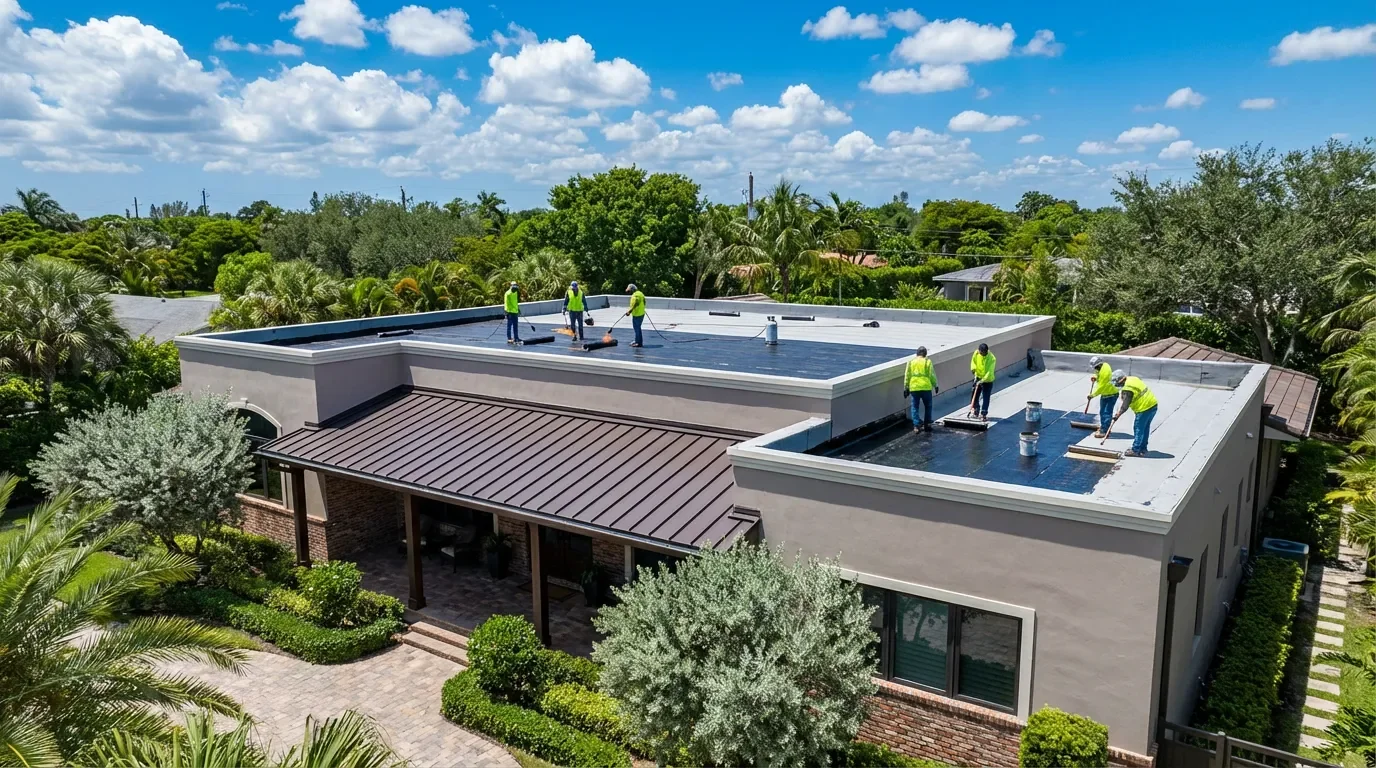
Torch-down installation uses an open-flame propane torch to heat the underside of the membrane until it melts slightly and bonds to the surface below. This creates a seamless, watertight bond. It's the most common method in Miami-Dade and is used on both base and cap sheets.
Cold-applied installation uses adhesive instead of heat. A two-part adhesive or solvent-based bonding agent is spread on the deck before the membrane is laid. This method is safer on occupied buildings where open flame is a concern. It's also preferred when the roof substrate is sensitive to heat. Self-adhered installation is the third option. The membrane has a factory-applied adhesive backing covered by a release film. Peel the film, roll out the sheet, and press it down. Self-adhered systems are faster to install and reduce fire risk even further.
In the HVHZ (High-Velocity Hurricane Zone), which covers all of Miami-Dade and Broward, the Florida Building Code requires that every roofing product carry a Miami-Dade Notice of Acceptance (NOA). This approval confirms the system has been tested to withstand 175+ mph wind uplift. Always confirm your contractor uses NOA-approved modified bitumen products.
How Modified Bitumen Is Installed: Step by Step
Inspect and Prep the Deck
The contractor removes old roofing and inspects the deck for rot, soft spots, or structural damage. Any damaged decking is replaced before anything else happens. A clean, dry, structurally sound deck is non-negotiable.
Apply Primer
A roofing primer is brushed or rolled onto the deck. Primer improves adhesion between the deck and the base sheet. Skipping primer is one of the most common installation shortcuts, and one of the most damaging long-term.
Install the Base Sheet
The base sheet is mechanically fastened or adhered to the deck. It creates the first layer of waterproofing and gives the cap sheet a stable surface to bond to. Fastener patterns must meet Florida Building Code wind uplift requirements.
Apply the Cap Sheet
The cap sheet, typically torch-applied or cold-adhered, goes on top of the base sheet. The cap sheet is the visible surface. It usually has a granulated finish that reflects UV and protects the asphalt underneath from direct sun exposure.
Flash All Penetrations and Edges
Pipe boots, drains, HVAC curbs, parapet walls, and edges are flashed with compatible materials. Flashing is where most flat-roof leaks originate. A thorough flashing job is the difference between a 10-year roof and a 20-year roof.
Modified Bitumen vs. TPO vs. EPDM: Which Is Right for You?
| Feature | Modified Bitumen | TPO / EPDM |
|---|---|---|
| Best for | Flat & low-slope residential roofs | Commercial & large flat roofs |
| UV resistance | Excellent (granulated cap sheet) | Good (TPO) / Moderate (EPDM) |
| Wind uplift | 175+ mph with NOA-approved system | Varies by fastener pattern |
| Foot traffic | High: granulated surface is durable | Low to moderate |
| Typical lifespan in South FL | 15–20 years | 15–25 years (TPO) / 10–15 years (EPDM) |
| Installation risk | Torch-down requires fire safety protocol | Lower fire risk with single-ply systems |
| Cost range | $4–$8 per sq ft installed | $3.50–$7 per sq ft installed |
Why Modified Bitumen Works Well in South Florida
South Florida's climate is hard on every roofing material. The UV index here regularly hits 10–11, the highest range on the EPA scale.
Daily heat causes roofing membranes to expand and contract. Summer thunderstorms dump inches of rain in under an hour. And salt air from the Atlantic speeds up corrosion on any exposed metal flashing or fastener.
Modified bitumen handles these conditions well for several reasons. The APP-modified cap sheet resists UV degradation far better than plain asphalt. The granulated surface reflects some solar energy, reducing surface temperatures. The SBS modifier gives the membrane enough elasticity to absorb thermal movement without developing stress cracks. And the two-ply system adds backup protection when ponding water (water that sits longer than 48 hours after rain) puts pressure on the membrane.
Homes in Homestead and South Miami often have flat-roof additions or covered carports that get ignored until they leak. A properly installed modified bitumen system on those structures can last 15–20 years with minimal maintenance. Compare that to our breakdown of how long a roof lasts in Florida and you'll see modified bitumen holds its own against most alternatives in the low-slope category.
Modified Bitumen by the Numbers
APP vs. SBS Modified Bitumen: What's the Difference?
APP (atactic polypropylene) and SBS (styrene-butadiene-styrene) are the two polymer types used to modify asphalt in these membranes.
They behave differently and suit different applications. APP-modified membranes are stiffer and highly UV resistant. They're almost always torch-applied. The torch heat melts the polymer blend and creates a strong, seamless bond. APP is a strong choice for South Florida roofs that get direct sun exposure for most of the day. The granulated surface typical of APP cap sheets also handles light foot traffic well, useful if HVAC technicians regularly access the roof.
SBS-modified membranes are more flexible. They feel almost rubbery at room temperature. SBS works well in cold-adhesive or self-adhered applications, though torch application is also common. Because SBS stretches more than APP, it handles extreme thermal movement better, an advantage on roofs with large temperature swings between night and day. For most flat-roof homes in Miami-Dade, either type performs well when properly installed. The installer's technique and the quality of the primer and adhesive matter just as much as which polymer is chosen.
When comparing your options, it also helps to read about what TPO roofing is and what EPDM roofing is, two single-ply alternatives that work on similar roof profiles. Each system has a different cost and maintenance profile.
Signs Your Flat Roof Needs Attention Now
- Ponding water after 48 hours: Water sitting on a flat roof longer than 48 hours after rain puts constant pressure on seams and flashings. It's a top cause of premature membrane failure in South Florida.
- Blistering or bubbling surface: Blisters form when moisture or air gets trapped between plies during installation. They weaken the membrane and often rupture under foot traffic or high heat.
- Visible cracking at flashings: Cracked or pulled-away flashing at parapet walls, drains, or HVAC units is an active leak waiting to happen, and the most common entry point for water.
- Granule loss on the cap sheet: Heavy granule loss means the asphalt underneath is exposed to direct UV. Without granule protection, the membrane degrades quickly and loses its waterproofing ability.
- Interior water stains after rain: Water stains on ceilings after a storm are the clearest sign of a membrane breach. Don't wait: a small leak spreads fast through insulation and decking.
What Does Modified Bitumen Roofing Cost in South Florida?
Modified bitumen roofing typically costs $4–$8 per square foot installed in South Florida, depending on roof size, ply count, access difficulty, and the installation method.
Torch-down systems on the higher end of that range require certified installers and fire safety protocol. A 1,000 sq ft flat roof addition in Coral Gables might cost $5,000–$8,000 fully installed with two-ply APP. A larger 2,500 sq ft flat commercial roof in Doral could run $12,000–$20,000 depending on deck condition and flashing complexity.
Those numbers assume a sound deck. If the contractor finds rot or structural damage underneath, common in older Miami-Dade homes with original 1970s or 1980s decks, add $2–$5 per square foot for deck repairs. Always get a written scope of work before agreeing to a price. Our guide on how much roofing costs breaks down what to expect across all major roofing systems.
Haven fields dedicated crews full-time. That means faster scheduling and consistent quality control on every job, because the same trained crews do the work from tear-off to final inspection. When you're comparing bids, ask every contractor who will actually be on your roof and how long that crew has worked with them. The answer matters for accountability.
How to Choose the Right Modified Bitumen Contractor
Not all roofing contractors are qualified to install modified bitumen in the HVHZ. Florida requires a licensed roofing contractor (state license prefix CC or CCC) to pull permits for any roof replacement.
You can verify any contractor's license through the DBPR license lookup tool. A license alone isn't enough. Ask specifically whether the contractor has installed NOA-approved modified bitumen systems and whether they pull permits on every job.
Permit-pulling matters more than most homeowners realize. A permitted roof replacement requires a city or county inspection. That inspection catches substandard work before the homeowner is stuck with it. Contractors who offer to skip the permit are cutting a corner that costs you. In Miami-Dade, unpermitted roofing work can delay or void a home insurance claim after a storm.
Our guide on how to choose a roofing contractor covers the full vetting checklist, from insurance certificates to warranty terms. Read it before you sign anything. And if you're still exploring which material is the best fit overall, our comparison of the most durable roofing materials puts modified bitumen in context with tile, metal, and TPO systems.