Why Roofing Style Choices Are Different in South Florida
South Florida roofing must comply with the Florida Building Code's HVHZ (High-Velocity Hurricane Zone) standards in Miami-Dade and Broward counties, which require 175+ mph wind uplift resistance, six-nail fastening patterns, and Miami-Dade NOA (Notice of Acceptance) approved materials, the strictest residential roofing code in the United States.
That single fact eliminates many materials popular in other states. Cheap three-tab shingles, lightweight polycarbonate panels, and uncertified metal profiles simply won't pass Miami-Dade's product approval process. Every style you consider must carry an NOA number searchable in the Miami-Dade NOA database.
Beyond code, the local climate punishes roofs in ways that northern contractors rarely see. UV radiation in South Florida is intense year-round. It degrades standard asphalt binders faster than the manufacturer's warranty assumes. Salt air within a mile of the coast corrodes exposed metal fasteners. High humidity promotes algae and mold growth on any surface that traps moisture. A roofing style that performs well in Atlanta may fail in Miami within five years. That's why knowing how to choose a roofing style in this region means starting with climate and code, not aesthetics.
The Three Main Roofing Styles for South Florida
Most South Florida roofs fall into one of three categories: tile, metal, or asphalt shingles. Each has a distinct profile, price range, and performance record in the local climate.
Flat or low-slope roofs (common on commercial buildings and some modern homes) use membrane systems like TPO or modified bitumen. Those are covered separately in our TPO roofing guide and modified bitumen post.
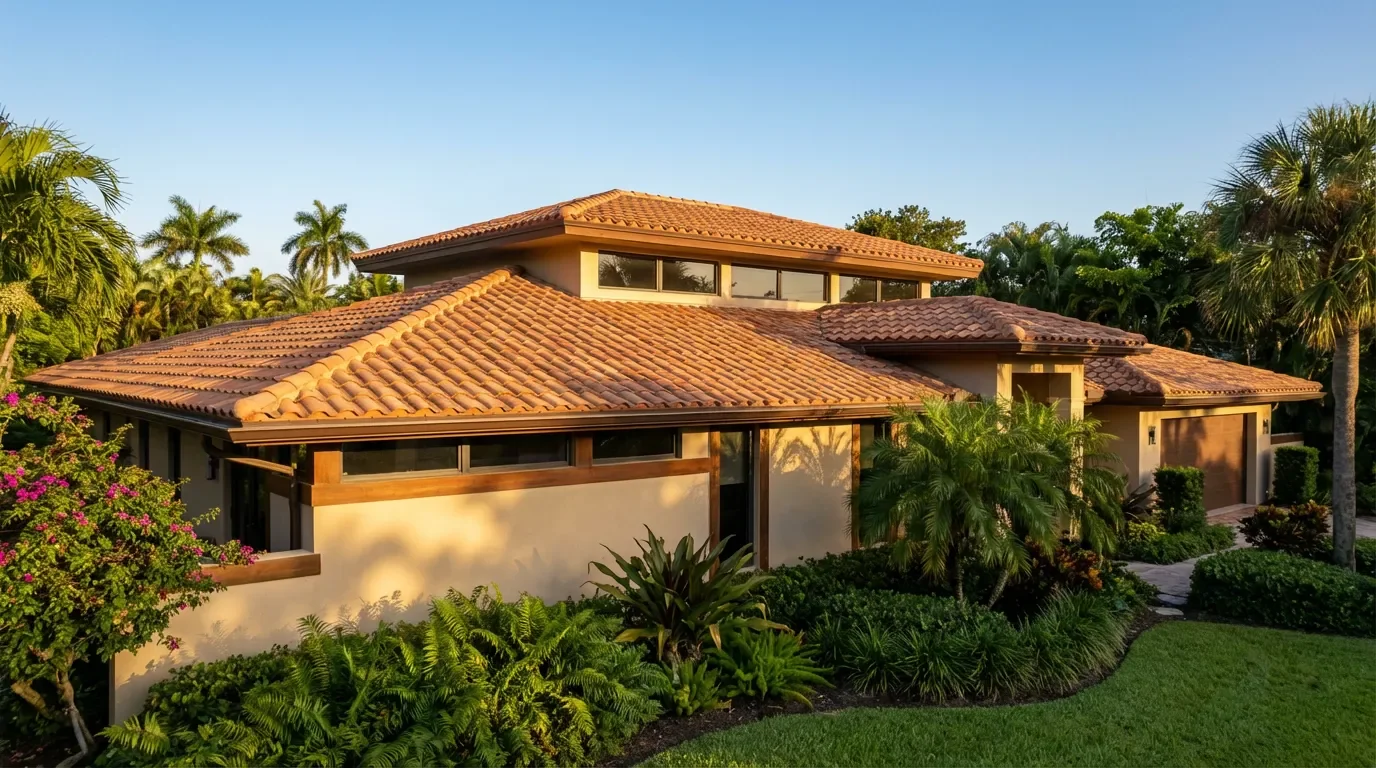
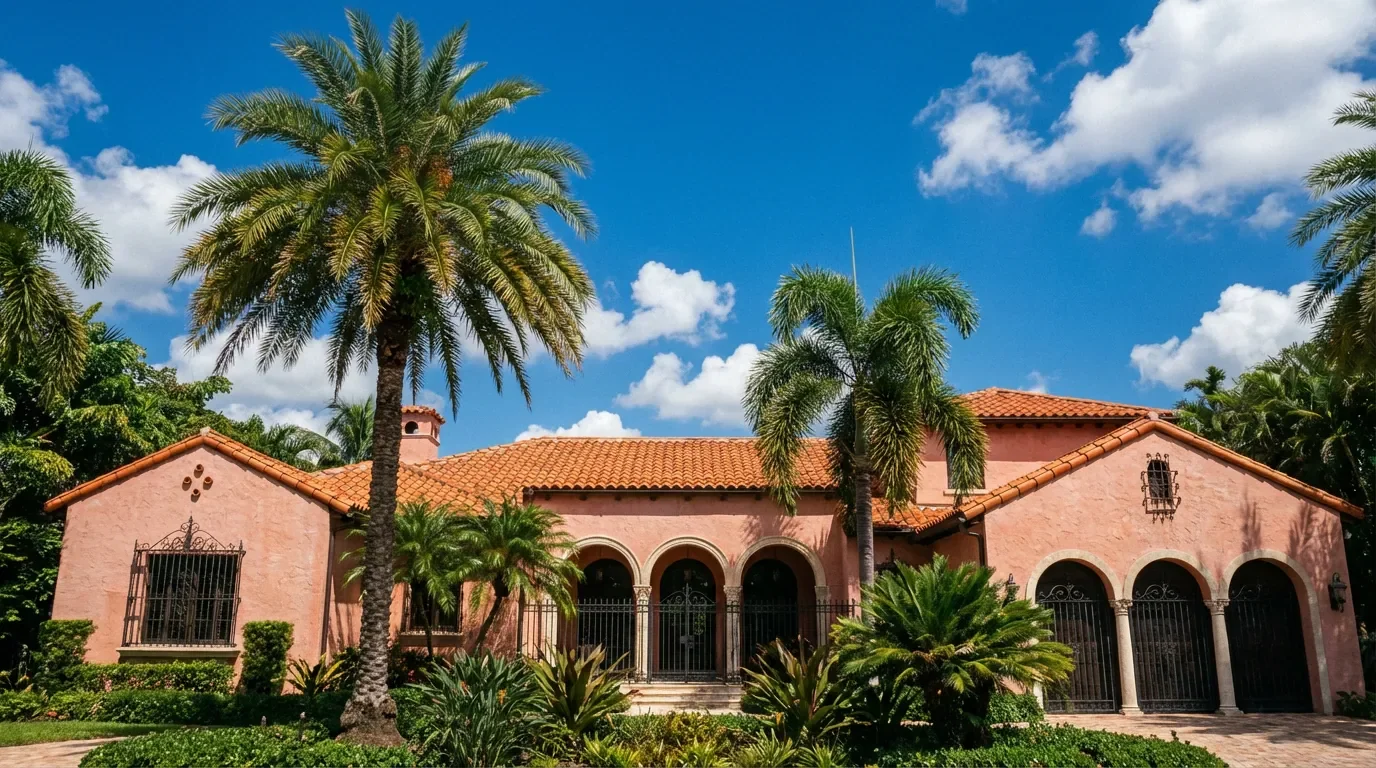
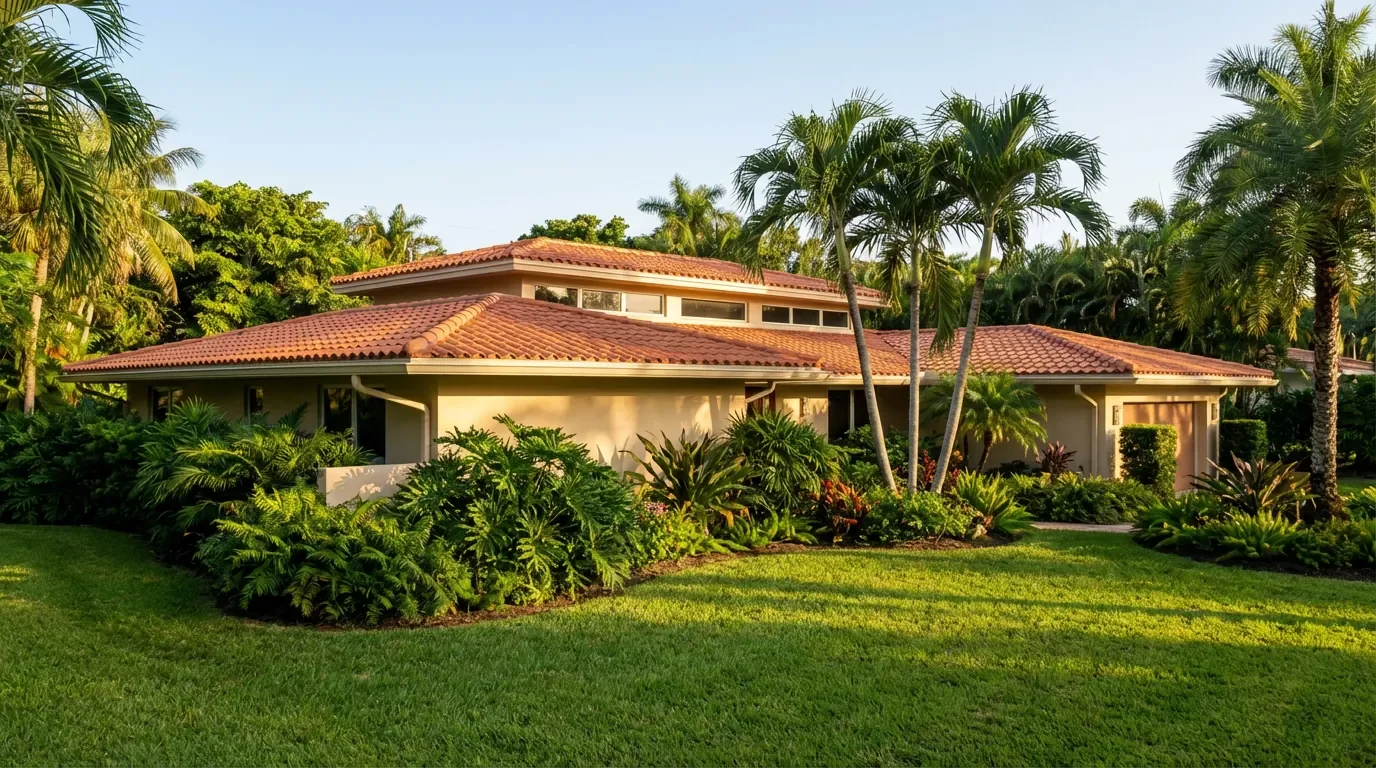
Concrete and clay tile roofs dominate the South Florida landscape. Drive through Coral Gables or Kendall and nearly every home has a barrel or flat tile profile. Concrete tile weighs 9–12 pounds per square foot. That weight requires a reinforced roof deck and properly engineered trusses. The payoff is exceptional durability. A well-installed concrete tile roof lasts 50 years or more and handles HVHZ wind loads without issue when set with the correct mortar-and-mechanical fastening system. Clay tile costs more than concrete but is lighter and carries a premium look that matches Mediterranean and Spanish Colonial architecture throughout Miami.
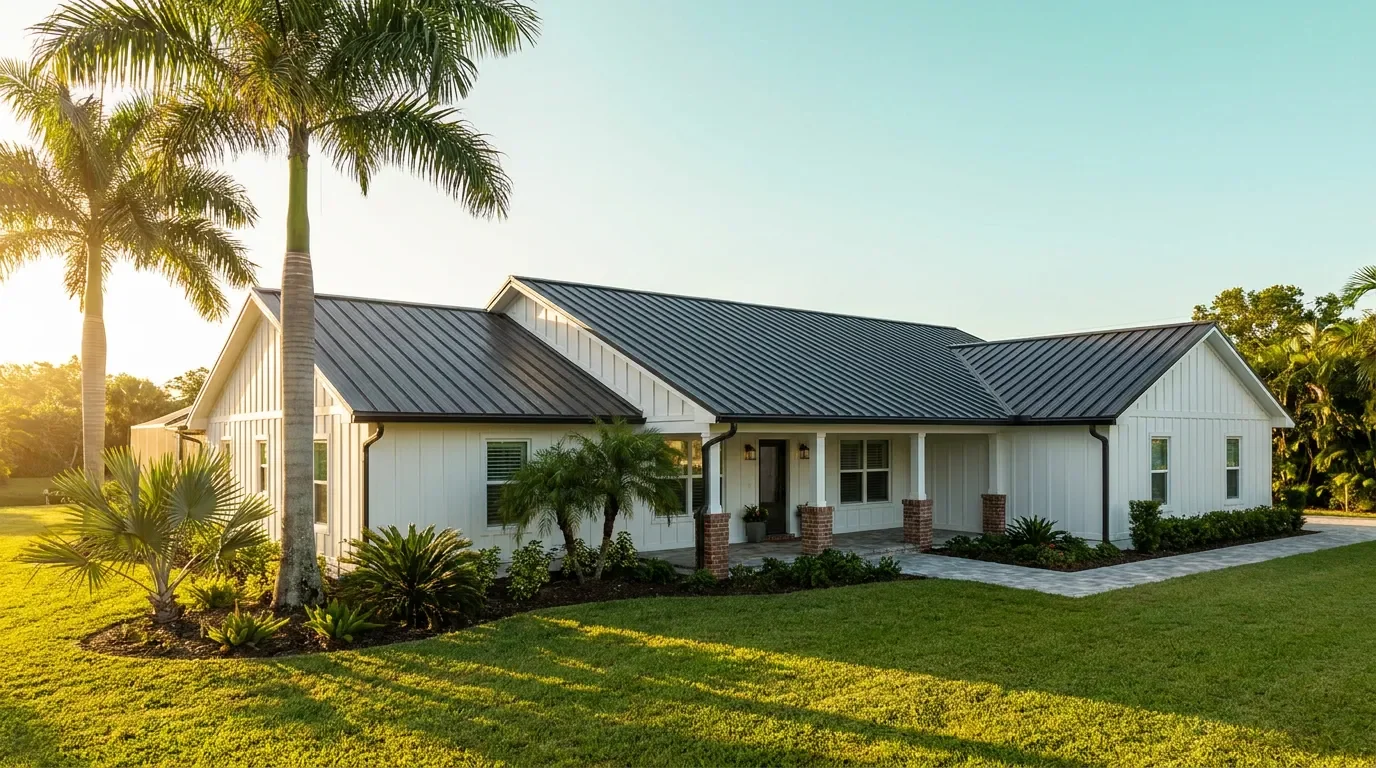
Metal roofing is the fastest-growing segment in residential South Florida. Standing seam metal systems (panels that interlock without exposed fasteners) have earned some of the highest Miami-Dade NOA ratings available. They shed water instantly, reflect solar heat, and resist salt corrosion when finished with a PVDF (polyvinylidene fluoride) coating. You can read more about metal's specific advantages in our guide to South Florida metal roofing. Asphalt shingles are the most affordable option. In South Florida, only architectural-grade (also called dimensional or laminate) shingles carry the impact resistance and wind ratings required under HVHZ rules. Standard three-tab shingles are code-prohibited in Miami-Dade and Broward.
Tile vs. Metal vs. Shingle: Side-by-Side
| Feature | Tile (Concrete/Clay) | Metal (Standing Seam) |
|---|---|---|
| Lifespan | 50–100 years | 40–70 years |
| Wind rating (HVHZ) | Up to 180 mph (NOA required) | Up to 200+ mph (NOA required) |
| Weight | 9–12 lbs/sq ft (heavy) | 1–3 lbs/sq ft (light) |
| Upfront cost | $$$ – $$$$ | $$$ – $$$$$ |
| Salt/corrosion resistance | Excellent (no metal exposed) | Excellent with PVDF coating |
| Energy efficiency | Good (ventilated air gap) | Best (solar reflectance) |
| Best architectural style | Mediterranean, Spanish, Ranch | Modern, Contemporary, Industrial |
Asphalt Shingles: Still a Smart Choice?
Architectural shingles remain a practical option in many South Florida neighborhoods. They cost significantly less than tile or metal and install in one to two days on a typical home.
The best shingle roofing products for this market carry a Class 4 impact rating (the highest available) and wind warranties of 130 mph or more. Brands like GAF's Timberline HDZ and Owens Corning's Duration carry Miami-Dade NOAs and meet HVHZ requirements. You can verify any product's approval at the Florida Building Code product approval portal.
The main tradeoff is lifespan. Even the best architectural shingles last 20–30 years in South Florida. UV degradation, heat cycling, and wind events shorten that window compared to northern climates. If you're buying a home you plan to sell within 10 years, shingles offer solid ROI. If you're staying long-term, tile or metal usually wins on total cost of ownership. For a deeper dive into cost across all materials, see our breakdown of how much roofing costs in South Florida.
How to Choose a Roofing Style: A 5-Step Framework
Check Your HOA and Local Zoning Rules
Many South Florida HOAs restrict roofing styles and colors. Coral Gables, for example, enforces strict historic district guidelines that may require clay tile over concrete. Check with your HOA before you pick a material. A roofing contractor can help you pull the relevant permit requirements too.
Confirm Your Roof Deck Can Handle the Weight
Tile roofs require structural reinforcement. If your home was originally built with shingles and you want to upgrade to concrete tile, a structural engineer must verify that your trusses and deck can carry the added load. Metal and shingles work on almost any existing deck structure.
Match the Style to Your Home's Architecture
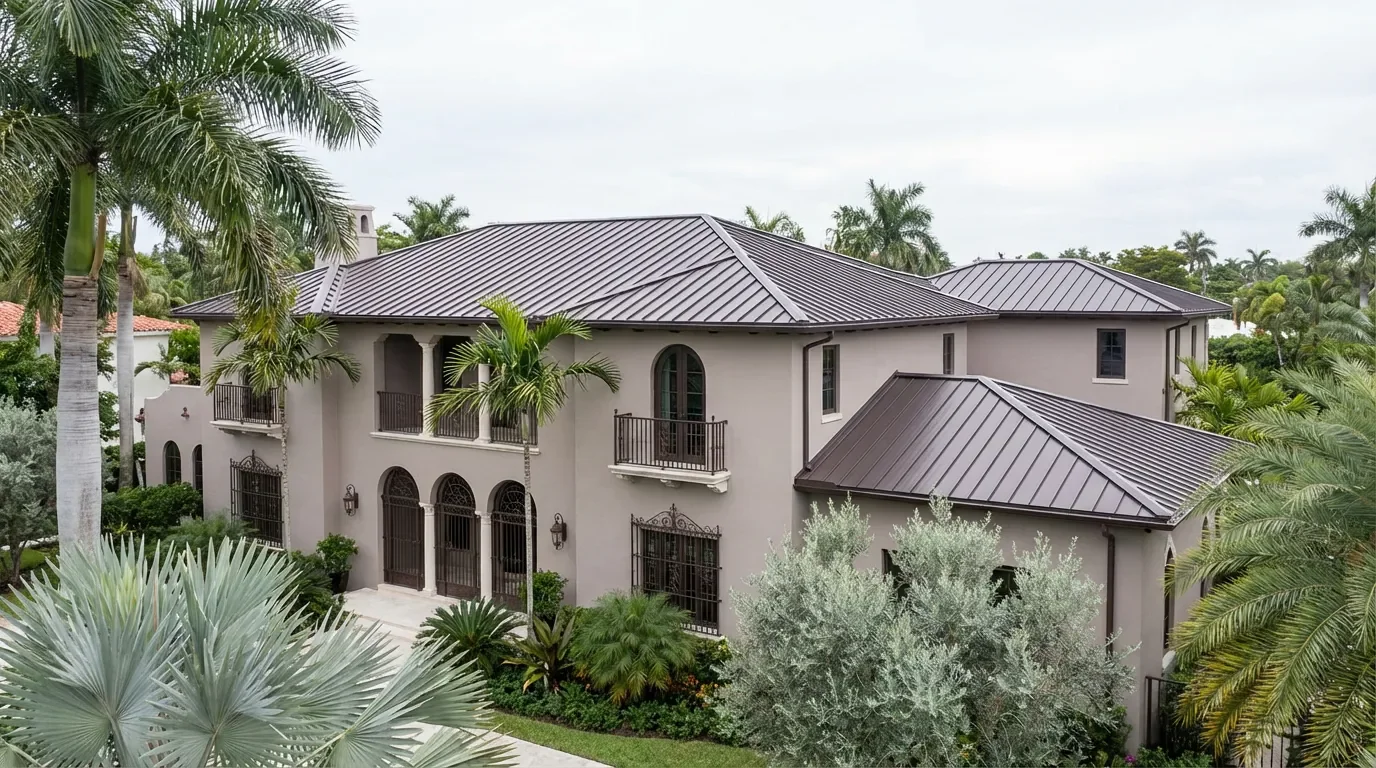
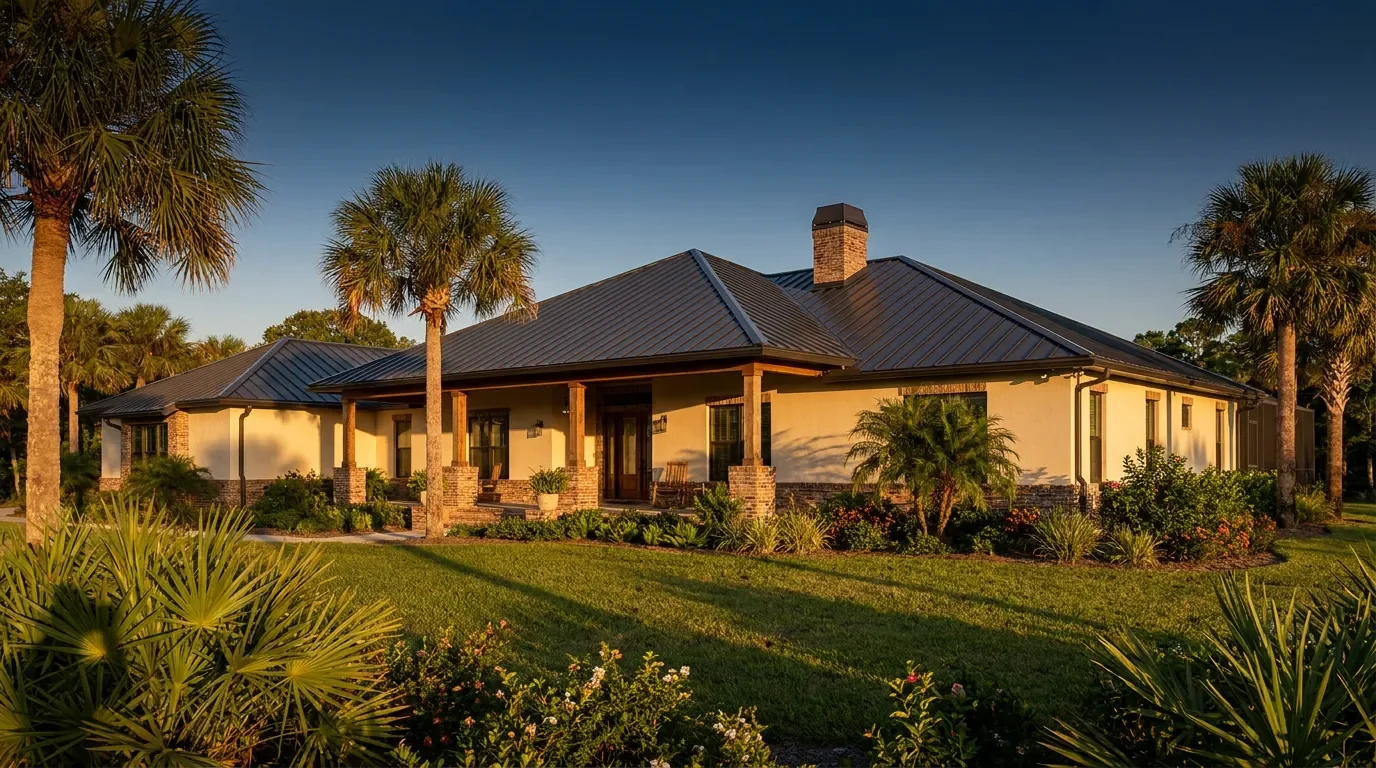
Mediterranean and Spanish Colonial homes look natural with barrel tile. Modern and contemporary homes pair well with standing seam metal in charcoal or bronze. Ranch-style homes in areas like Homestead or Kendall work well with either dimensional shingles or flat tile profiles.
Compare Total Cost of Ownership, Not Just Upfront Price
A metal roof costs more on day one but may never need replacement during your ownership. A shingle roof costs less upfront but needs replacement in 20–30 years. Factor in insurance discounts too. Many South Florida insurers offer lower premiums for impact-rated metal or tile systems.
Verify NOA Approval and Hire a Licensed Contractor
Every material must carry a Miami-Dade NOA number. Every contractor must hold an active Florida license. Verify yours at the DBPR license lookup. An unlicensed contractor's work won't pass final inspection, and you'll pay twice.
How Roofing Style Affects Your Insurance Premium
Florida homeowners insurance is expensive, and your roofing style directly affects your rate.
Miami-Dade and Broward insurers use a system called the Uniform Mitigation Verification Inspection (UMVI) to score your roof's wind resistance. Roofs with higher wind mitigation scores earn larger discounts. A standing seam metal roof with a hip (pyramid-shaped) design scores the maximum on nearly every UMVI category. Concrete tile with a hip design scores similarly well. Gable-end roofs score lower regardless of material because the triangular wall section at each end acts like a sail in high winds.
If you're replacing a flat-entry shingle roof with a hip-design metal system, you could see your wind mitigation discount jump from 10% to 40% or more on the wind portion of your premium. In South Florida, that often means hundreds of dollars per year in savings. Ask your insurance agent for a wind mitigation inspection quote before you finalize your material choice. The payback math sometimes tips a borderline decision toward metal or tile. Our post on how long a roof lasts in Florida explains how insurance companies factor roof age into your renewal rate as well.
Choosing how to choose a roofing style isn't just a one-time aesthetic call. It shapes your insurance cost, resale value, and maintenance schedule for the next two to five decades. Aldo Dellamano, Haven's licensed General Contractor, recommends homeowners treat the roofing decision the same way they'd treat a full bathroom remodel: with a written scope, multiple material samples, and a contractor who pulls permits and stands behind the work.
Common Mistakes to Avoid When Choosing a Roofing Style
- Skipping the NOA check: Every material must have a current Miami-Dade NOA before installation. Products without one will fail inspection and need to be removed at your expense.
- Ignoring roof pitch requirements: Barrel tile requires a minimum 2.5:12 pitch (rise to run). Flat or low-slope roofs need membrane systems like TPO, not tile or shingles.
- Choosing style before structure: Upgrading from shingles to heavy tile without a structural assessment can overstress trusses. Always get an engineer's sign-off before adding weight.
- Overlooking color and heat gain: Dark-colored shingles absorb significantly more solar heat than light tile or white metal. In South Florida's climate, color choice affects your cooling bill every month.
- Hiring based on lowest bid alone: The cheapest bid often means unlicensed labor, uncertified materials, or skipped permit steps. Read our guide on how to choose a roofing contractor before signing anything.
Roofing Style by Neighborhood: Local Considerations
The right roofing style also varies by where in South Florida you live. Coastal areas like Miami Beach and Aventura face heavy salt air exposure.
Metal systems with PVDF coatings and stainless-steel fasteners outperform standard galvanized hardware within a quarter mile of the ocean. If you live in Miami Beach, discuss corrosion-resistant hardware explicitly with your contractor before signing any contract.
Inland neighborhoods like Doral, Hialeah, and Homestead see slightly less salt exposure but more extreme heat and the occasional hail event from inland thunderstorms. Architectural shingles with a Class 4 impact rating perform well in these areas and cost less than tile or metal. Homestead sits near the agricultural fringe of Miami-Dade, where tornado-spawning supercells are more common than on the coast. There, impact resistance is the top priority, learn more at our storm damage page.
Historic districts like Coral Gables have design review processes that can take four to eight weeks. Factor that into your project timeline. Haven's team handles the permit and HOA approval paperwork for every project, which is one reason our replacement timeline from signed contract to final inspection runs just 4 to 6 weeks in standard jurisdictions. For neighborhoods where the permitting process is longer, we set accurate expectations upfront so there are no surprises.
What Comes After You Choose Your Roofing Style
Once you've settled on a style, the next step is getting a detailed written estimate that includes material specs, NOA numbers, permit fees, and a timeline.
A reputable contractor will pull the permit before touching your roof, not after. They'll also provide a manufacturer's warranty (typically 30–50 years on materials) and a workmanship warranty (at least 5 years on labor). Our guide to durable roofing materials walks through warranty terms in detail.
During installation, your contractor should install a secondary water barrier (SWB) beneath the primary roofing material. Florida Building Code requires this on all new residential roofs. The SWB acts as a second line of defense if wind peels back tiles or shingles during a storm. Ask specifically whether the SWB is self-adhered (peel-and-stick) or mechanically fastened, self-adhered systems outperform mechanical fastening in HVHZ wind events. Once installation is complete, the contractor schedules a final inspection with the county. Only after the inspector signs off is the permit officially closed and the manufacturer's warranty activated. If you skipped permits, that warranty is void.
Knowing how to choose a roofing style is only half the battle. Execution (the right materials, the right crew, the right permits) determines whether that style protects your home for decades or fails in the first major storm.